
Many homeowners are asking, “Can I extend my house in a conservation area?” and the reassuring answer is: yes, in most cases you can. Conservation area status does not prevent extensions.
What it does is place greater scrutiny on how they look, what materials are used, and how closely the design respects the surrounding character.
In 2024, there were recorded 9,907 conservation areas across England, covering more than 10% of all properties in the country. If your home sits within one of these designated zones, you are far from alone in working through this process.
This article covers:
- Whether extensions in a conservation area are achievable
- What councils assess before reaching a decision
- Which extension types carry higher or lower planning risk
- The practical steps to check your property before committing to design costs
This guide is written from Archevolve’s 15+ years of experience in architectural design and planning consultancy, helping UK homeowners improve their properties, increase their space, and secure planning approval without costly delays or redesigns.
Can You Extend a House in a Conservation Area?
Yes, and many applications succeed. National data from GOV.UK shows householder planning applications, which include extensions, reached an 89% approval rate in 2024.
Conservation area proposals face closer assessment, but well-designed projects with accurate documentation are approved regularly.
The difference is not whether extensions in a conservation area are possible. The difference is what the council assesses and which permitted development rights, if any, still apply to your specific property.
Understanding the rules around planning permission for a house extension in the UK is the clearest starting point before any design work begins.
| Category | Standard House | Conservation Area | Listed Building |
| Planning risk level | Low to moderate | Moderate to high | High |
| Permitted development available | Yes, fully | Partially restricted | No |
| Design and materials assessed | Rarely | Yes | Yes, in detail |
| Professional advice recommended | Optional | Strongly advised | Essential |
What Conservation Area Status Actually Changes
The core shift is increased control over external appearance. Councils can assess changes that would not trigger a planning requirement anywhere else, particularly anything visible from a public road or open space.
Conservation areas were introduced in England in the 1960s to protect areas of special architectural or historic interest.
Local planning authorities manage them to preserve the features that give each area its distinct character, and they take that responsibility seriously when assessing new proposals.
Why Article 4 Directions Matter
Article 4 Directions are the most important, and most overlooked, variable in conservation area planning. A local authority can use one to remove specific permitted development rights across a defined area or even for individual properties.
In practice, this means that works you might carry out without permission elsewhere now require a formal application. Article 4 Directions apply only to residential dwellinghouses. They do not affect flats or commercial properties.
| Check | Why It Matters |
| Is there an Article 4 Direction on your property? | May remove all or some permitted development rights |
| Does it cover extensions specifically? | Determines whether a formal application is needed |
| Is it a full Article 4 or Article 4(2) direction? | Article 4(2) applies only to street-facing elevations |
| Where can you confirm this? | Your council’s planning portal or conservation area map |
Always check for an Article 4 Direction before assuming any work falls under permitted development. The council’s planning portal is the most reliable place to do this.
What Councils Usually Look At Before Approving an Extension
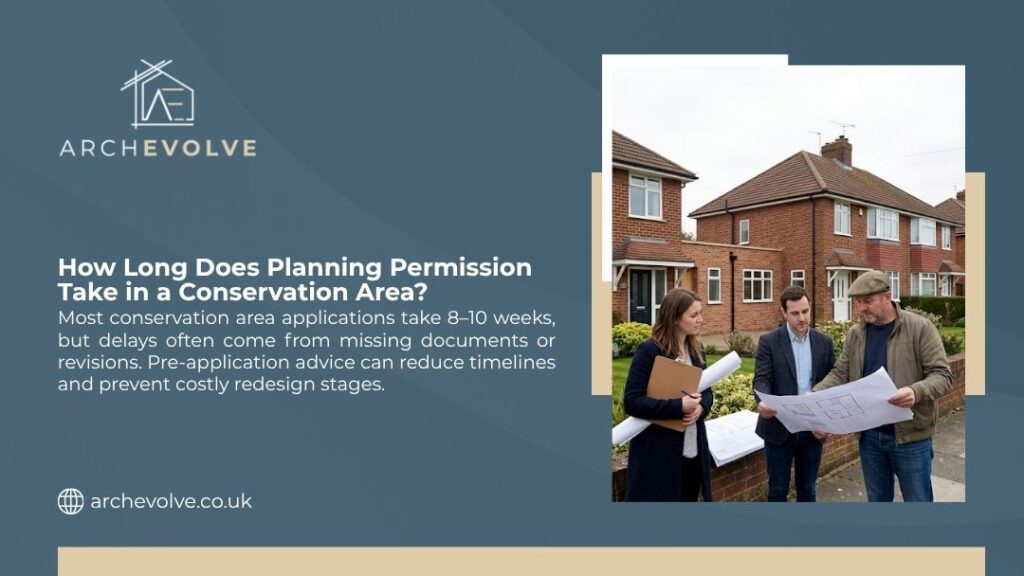
For extensions in a conservation area, planning officers assess more than size. The core question is how the proposed extension affects the visual character of the area, not just the property itself.
Approval rates vary significantly by council and by how well an application is prepared.
According to 2024/25 data, some authorities approve more than 97% of applications while others fall well below 50%.
That gap reflects preparation quality as much as local policy.
| Design Feature | Planning Risk Level |
| Rear single-storey extension, not visible from street | Low |
| Side single-storey extension, partially visible | Medium |
| Front extension or porch addition | High |
| Roof alterations affecting the roofline | High |
| Materials that contrast with the original building | High |
Visibility from the Street
Visibility is one of the most consistent factors in conservation area decisions. An extension at the rear of a property, hidden from any public road or open space, will almost always face lower planning scrutiny than one that changes how the building looks from the street.
This does not mean rear extensions always avoid a formal application. Scale, massing, and proximity to boundaries still matter.
But their impact on the conservation area’s character is naturally lower, and councils reflect that in how they assess them.
Design, Materials, and Scale
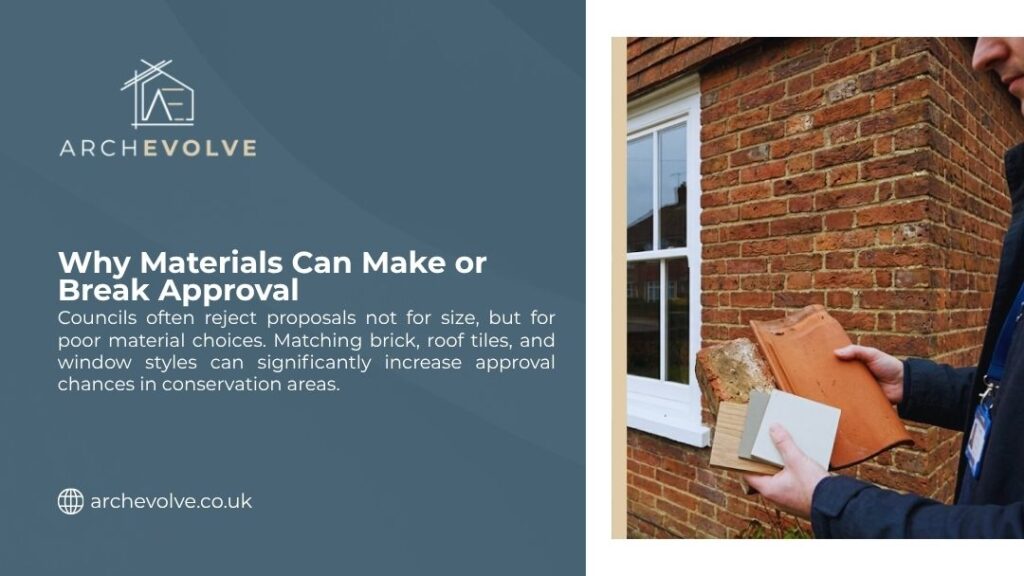
Matching the character of the area goes beyond using a similar brick. Officers assess proportion, roofline, window detailing, and how the extension relates to the original building as a whole.
An extension that feels subordinate to the main house, consistent in material choice and respectful of the existing roofline, is far more likely to receive a positive recommendation.
For conservation area applications, standard floor plans and elevation drawings are often not sufficient. Many councils expect high-quality 3D visualisations, perspective drawings, and coloured elevations that show clearly how the proposal sits within its setting.
What You Can Usually Do vs What Usually Needs Permission
Not every project requires a full planning application. Knowing where your proposal sits before any drawings are commissioned can save significant time and cost.
Extensions in a conservation area follow the same broad framework as standard applications, but with additional layers of assessment.
For homeowners also considering the roof space, the rules around planning permission for a loft conversion follow similar logic. Loft conversions under permitted development are not available within conservation areas, so a formal application is always required.
| Extension Type | Planning Sensitivity | Permission Needed? | Conservation Area Notes |
| Small single-storey rear extension | Low | Check Article 4 first | May need full application |
| Large single-storey rear extension | Medium | Yes | Full application likely |
| Two-storey rear extension | High | Yes | Full application required |
| Side extension | Medium to high | Yes | Affects street appearance |
| Front extension | High | Yes | Significant character impact |
| Outbuilding in rear garden | Low | Often not | Curtilage rules apply |
Rear Extensions
Rear extensions are the most common starting point for homeowners in conservation areas. They carry the lowest planning risk in terms of visual impact, and they are where most successful extensions in a conservation area begin.
That said, being hidden from public view does not automatically mean permitted development applies. If an Article 4 Direction is in place, even a modest rear addition may need a full application.
Scale and materials are still assessed regardless of visibility.
| Rear Extension Scale | Likely Planning Route |
| Small single-storey within PD size limits | Prior approval or full application depending on Article 4 |
| Large single-storey beyond standard limits | Full planning application |
| Two-storey rear extension | Full planning application, higher scrutiny |
Side and Front Extensions
Side extensions draw greater council attention because they directly affect the street scene.
A side addition that widens the building or reduces the gap between properties is treated as a change to the area’s visual character.
That assessment sits at the heart of what conservation area planning is designed to address.
Front extensions are the most sensitive category. Any visible change to the principal elevation in a conservation area will almost always require a formal application, regardless of how minor the works appear in isolation.
How to Check Your Property and Apply With Confidence
Before committing to design costs or engaging a contractor, a clear set of checks should come first. Extensions in a conservation area that are properly prepared are far more likely to succeed, and far less likely to generate requests for expensive revisions or costly redesigns mid-process.
Extending your house without planning permission in a conservation area carries genuine risk. Unauthorised works can lead to enforcement notices and, in some cases, a legal requirement to remove the structure at the homeowner’s expense.
What to Check Before Spending on Drawings
| Step | Action | Why It Matters |
| 1 | Confirm your property sits within a conservation area | Defines which planning rules apply |
| 2 | Check for an Article 4 Direction on the council’s portal | Establishes your permitted development position |
| 3 | Review the local conservation area appraisal | Shows what the council prioritises in assessments |
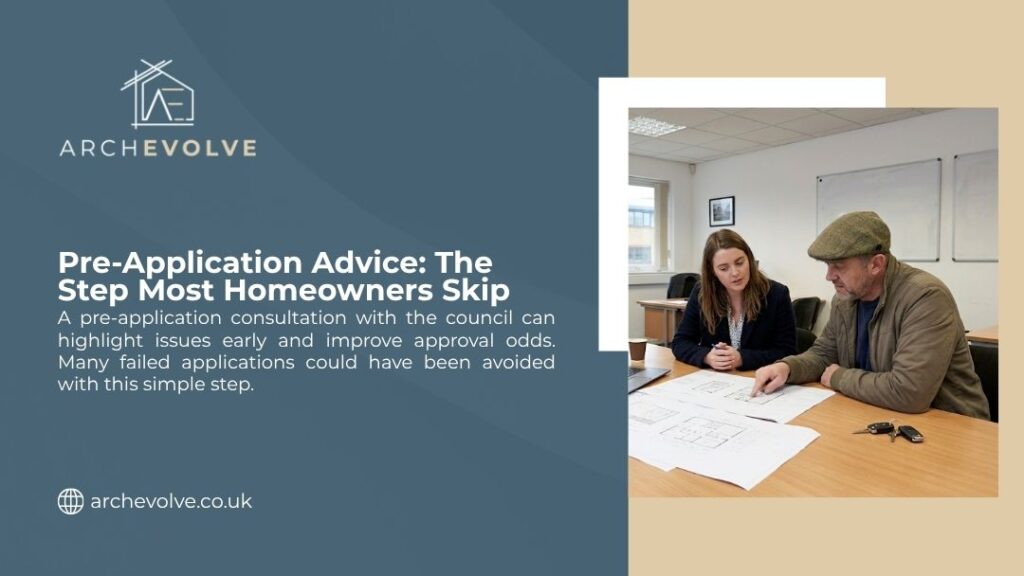
| 4 | Consider a pre-application enquiry with the planning department | Reduces the risk of a full refusal |
| 5 | Brief an architect with conservation area experience | Avoids costly design revisions at application stage |
What to Submit with the Application
Conservation area applications typically require more supporting material than standard householder submissions. Officers need a complete picture of the existing building, the proposed changes, and how those changes relate to the surrounding area.
| Document | Purpose |
| Existing floor plans and elevations | Establishes current layout and external appearance |
| Proposed floor plans and elevations | Shows the changes in precise detail |
| Site plan | Locates the property within its plot and wider context |
| Roof plan | Identifies any changes to the roofline |
| Heritage or design statement | Explains how the proposal respects the conservation area |
| 3D visualisations | Helps officers assess visual and character impact |
Submitting a complete, well-presented application reduces delays, limits back-and-forth with the case officer, and gives the planning authority everything it needs to reach a confident decision.
FAQs
Can I extend my house in a conservation area?
Yes, extensions in a conservation area are not automatically refused. Design, materials, scale, and visibility all factor into the decision. A well-prepared proposal with the right supporting documents has a strong chance of approval.
Do I always need planning permission in a conservation area?
Not always, but conservation area status restricts some permitted development rights. If an Article 4 Direction applies to your property, works that would normally fall under permitted development will require a formal planning application instead.
What is an Article 4 Direction?
An Article 4 Direction is a local rule that removes specific permitted development rights within a defined area. In conservation areas, these directions ensure that external changes go through the planning process even when they are modest in scale.
Does the extension have to match the style of the original building?
Not identically, but it must respect the character of the area. Councils assess proportion, scale, materials, and how the extension relates to the host building. Contemporary designs can be approved when they are well-considered and clearly presented.
How strict are conservation area rules compared to standard residential areas?
Stricter, but not prohibitive. The primary difference is that conservation area applications face closer assessment of external appearance.
With householder applications achieving an 89% national approval rate and the right professional support in place, successful outcomes are genuinely achievable.
The Clearest Path Forward
Extensions in a conservation area are achievable. With over 9,900 conservation areas in England and householder approval rates sitting at 89% nationally, the planning system is designed to ensure that change is handled with care.
The homeowners who succeed are those who check Article 4 Directions early, work with professionals who have genuine conservation area experience, and submit applications backed by complete, high-quality documentation.
With 15+ years of experience and over 500 projects completed across residential extensions, new builds, and planning applications, Archevolve helps homeowners across England take conservation area projects from initial feasibility through to full planning approval..
We know what councils look for, how to present proposals effectively, and how to protect your budget from unnecessary revisions. Get in touch with Archevolve today and find out exactly what your property can achieve.