
How much does a garage conversion really cost in the UK once you include insulation, electrics, flooring, and building regulations?
Most homeowners start with a rough figure and find the garage conversion cost UK average is only a starting point. The final total shifts based on garage type, the room being created, structural condition, and how much the builder’s quote actually covers.
Garage Conversion Cost UK Average
The garage conversion cost UK average for a standard single garage sits between £10,000 and £20,000 in 2026. On a per-square-metre basis, conversions typically run £625-£1,250/m².
Compare that to the house extension cost in the UK, which averages £1,800-£3,000/m² for new construction.
The structure already exists – no foundations to dig, no roof to build – and that difference drives the cost gap.
How Much Does a Garage Conversion Cost in the UK on Average?
For a single garage of around 16-18m², costs break down by specification:
| Specification | 2026 Cost Range |
| Basic conversion (office, playroom, utility room) | £8,000 – £14,000 |
| Mid-range (bedroom or playroom with en-suite) | £14,000 – £22,000 |
| High-spec (annexe or self-contained space) | £22,000 – £35,000+ |
These figures include structural work, insulation, plastering, electrics, and basic fit-out. En-suites, kitchenettes, and premium finishes push costs beyond these ranges.
What Drives the Garage Conversion Cost UK Average Higher
The garage conversion cost UK average changes significantly once the full scope is defined. A quote that looks competitive often covers the structural shell only – no flooring finish, no heating extension, no electrical upgrade beyond the minimum.
Two quotes on the same garage can differ by £8,000 or more based entirely on what each includes. The biggest variables are insulation upgrades, drainage complexity, the state of the existing slab, and whether plumbing is involved.
What Changes the Price of a Garage Conversion?
Garage type, intended use, and structural condition all move the price. Location adds further variance – London and the South East typically run 15-25% above the national average.
| Cost Driver | Why It Adds Cost |
| Detached vs integral | Detached garages require separate service connections (heating, drainage, electrics) |
| Plumbing and drainage | Soil pipe runs can require cutting through concrete floors |
| Damp-proof membrane | Needed where no existing DPM is in place – adds £1,000-£3,000 |
| Garage door removal | New front wall, window, or French doors adds material labour cost |
| Finish level | Standard vs high-spec interiors can add £5,000-£10,000 |
Garage Type Matters More Than Most People Expect
An integral garage, built within the main house, is the cheapest to convert. The structure is already part of the building – walls, roof, and foundations are shared – so work centres on insulation, a new front wall, and internal fit-out.
A detached garage costs more because heating, electrical, and drainage connections must run from the main house.
If drainage fall proves insufficient, rerouting pipes across the garden can push a £18,000 project to £26,000. A structural survey early in the process reduces this risk significantly.
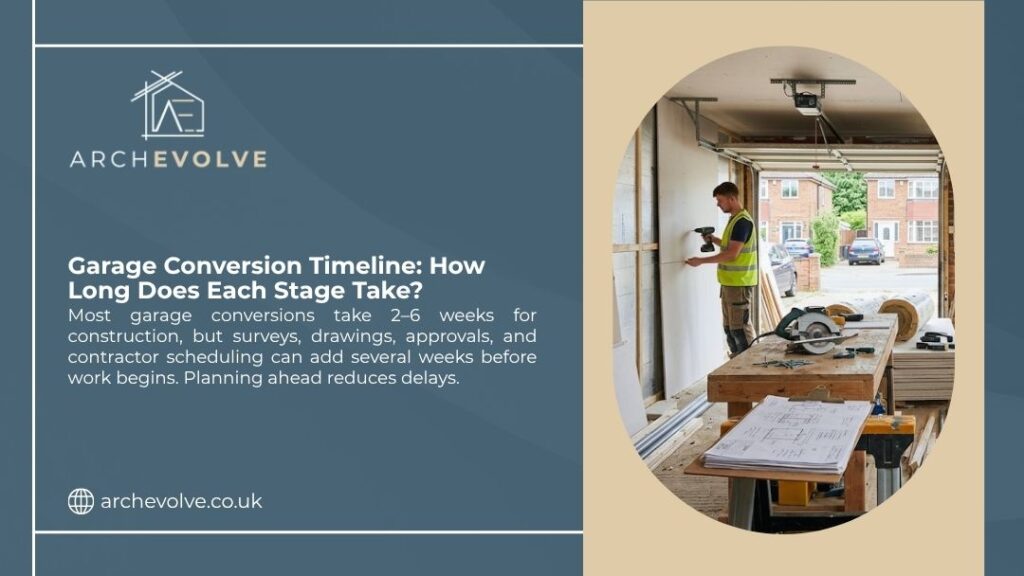
The Room You Want to Create Changes the Budget
A home office or playroom is the most cost-efficient choice. No plumbing is needed, electrics are standard, and finish requirements are straightforward.
Adding a bathroom introduces drainage, tiling, and certified plumbing work. A self-contained annexe requires full services and additional compliance consideration.
| Intended Use | Approximate Cost | Main Cost Driver |
| Home office or playroom | £8,000 – £14,000 | Insulation and electrics |
| Bedroom (no en-suite) | £12,000 – £18,000 | Fire safety, escape window |
| Bedroom with en-suite | £18,000 – £28,000 | Plumbing, drainage, tiling |
| Self-contained annexe | £22,000 – £35,000+ | All services and full compliance |
Items most commonly absent from initial quotes:
- Damp-proof membrane and floor build-up: £1,000 – £3,000
- Full electrical fit-out including consumer unit review: £1,500 – £3,000
- Extending central heating: £800 – £2,000
- Structural engineer calculations: £450 – £900
- Asbestos removal (pre-1985 garages): £500 – £3,000 where present
- Flooring finish (rarely in the build quote): £500 – £2,000
Always add a 10-15% contingency. Understanding what architectural drawings cost in the UK helps identify which professional fees belong in the quote and which are often billed separately.
Planning Permission, Building Regulations, and Other Rules
Around 70% of garage conversions in the UK proceed without a planning application. Most internal conversions fall under permitted development rights.
That does not mean without compliance – building regulations apply to every garage conversion.
| Scenario | Planning Permission | Building Regs Required? |
| Integral or attached, internal change | Usually not required | Always |
| Detached garage to habitable room | Usually not required | Always |
| Conversion to separate dwelling | Usually required | Always |
| Conservation area or listed building | Required in most cases | Always |
Do I Need Planning Permission for a Garage Conversion?
For most homeowners, the answer is no – provided the conversion is internal and does not significantly alter the exterior. Applying for a Lawful Development Certificate (LDC) is strongly recommended regardless.
It costs £103-£310 in England (2026) and provides legal confirmation of permitted development status, protecting you when selling or remortgaging.
Building regulations are entirely separate and always apply. The key parts covering garage conversions are:
- Part A: Structural stability of any wall openings
- Part B: Fire safety and escape routes
- Part C: Damp-proofing
- Part F: Ventilation
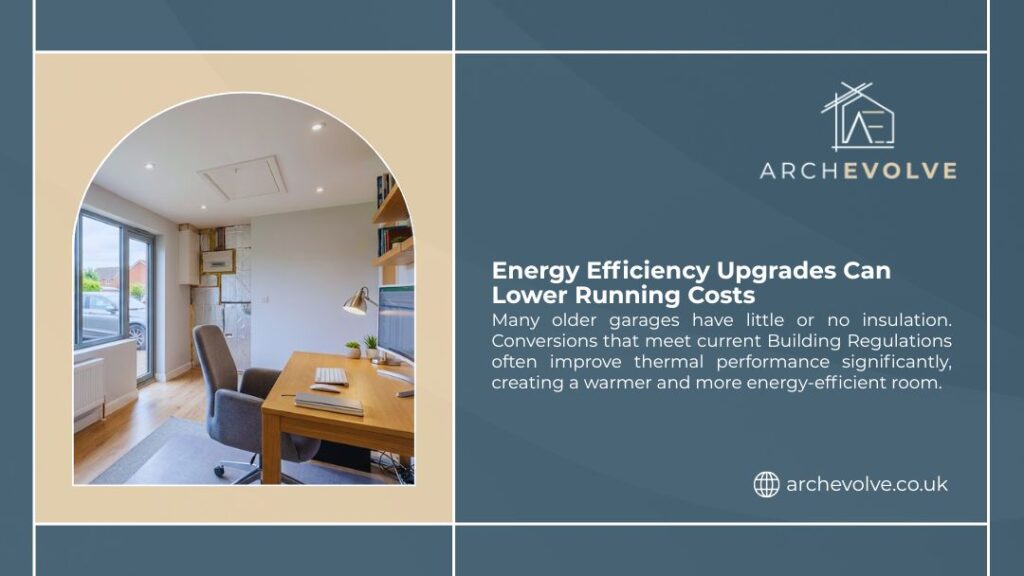
- Part L: Thermal insulation and energy efficiency
- Part P: Electrical safety
Building control fees run £300-£900 depending on local authority. Without a completion certificate, the space cannot legally be used as habitable accommodation – and it creates serious complications when selling.
If you are also weighing up whether to extend instead, understanding extend your house without planning permission clarifies which route is simpler for your property’s specific situation.
Is a Garage Conversion Worth It?
Getting a clear picture of the garage conversion cost UK average for your specific garage type and intended use is the first step to assessing whether the project makes financial sense.
Will It Add Value to My Home?
A quality garage conversion typically returns £1.20-£1.50 for every £1 spent in 2026. Property value uplift runs at 10-20% depending on location, finish quality, and what the converted room adds.
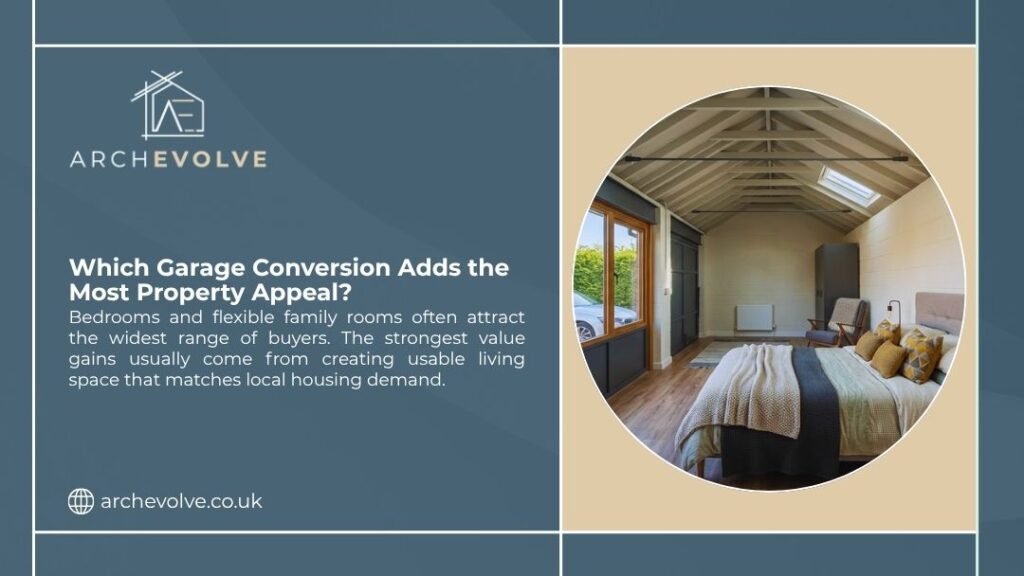
Adding a bedroom – particularly one that moves the home from three to four bedrooms – adds 8-12% to value and accesses a broader pool of buyers.
On a £420,000 home, a 10-20% uplift represents £42,000-£84,000 in added value. That figure comfortably exceeds the typical conversion cost for most single garage projects.
| Benefit | Possible Drawback | Best Fit |
| Cheaper than a full extension | Building regs always required | Budget-conscious homeowners |
| Fast build time – 2-4 weeks | Hidden structural costs possible | Families needing quick space |
| Strong ROI when adding a bedroom | Neutral or negative in parking-scarce areas | Homes with alternative parking |
| No garden space lost | Loses storage or parking use | Homes with a driveway or street parking |
In areas where off-street parking is the only available space, losing a garage can reduce buyer appeal. Some title deeds and original planning conditions also require parking to be maintained. Check both before committing.
How to Budget and Compare Quotes
A realistic assessment of the garage conversion cost UK average starts with a full budget, not just the build line.
| Budget Component | Estimated Range |
| Base build cost | £8,000 – £25,000 |
| Professional fees (drawings, engineer) | £1,500 – £4,000 |
| Building control fees | £300 – £900 |
| Finishing (flooring, decoration) | £500 – £2,500 |
| Contingency (10-15%) | £1,000 – £4,000 |
What a Proper Garage Conversion Quote Should Include
A quote that leaves out major line items is not a cheaper project – it is an incomplete one. Before accepting any figure, confirm these are priced in:
- Garage door removal and construction of new front wall
- Insulation to current Part L standards (walls, floor, ceiling)
- Damp-proof membrane where not already in place
- Full electrical fit-out and consumer unit capacity check
- Heating extension or standalone alternative
- Building control application and inspection fees
- Structural floor levelling where the slab slopes or is low
Frequently Asked Questions
How much does a garage conversion cost in the UK on average?
The garage conversion cost UK average sits between £10,000 and £20,000 for a standard single garage in 2026. Detached or high-spec conversions with plumbing can reach £25,000-£46,000 depending on scope and specification.
Is a garage conversion cheaper than an extension?
Yes, significantly. Garage conversions run £625-£1,250 per m² compared to £1,800-£3,000 per m² for a new-build extension. The existing structure removes the most expensive elements of any build.
Do I need planning permission for a garage conversion?
Most internal conversions fall under permitted development in England and do not need a planning application. An LDC (£103-£310, 2026) is strongly recommended. Building regulations approval is always required. Before you set a budget, read our guide to planning permission for garage conversion UK projects to see where conservation areas and Article 4 Directions change things.
What hidden costs should I budget for?
Common hidden costs include damp-proof membrane work, a full electrical fit-out, central heating extension, building control fees, structural engineer calculations, asbestos removal in older garages, and a separate flooring finish.
Does a garage conversion add value to a house?
A well-executed conversion adds 10-20% to property value in most UK markets in 2026. The strongest return comes from adding a bedroom that moves the home into a higher bedroom-count bracket.
The Right Conversion Starts With the Right Budget
Getting a garage conversion right is less about finding the lowest quote and more about building a budget that reflects what the project genuinely requires.
The garage conversion cost UK average covers a wide range for a reason – specification, garage type, and compliance requirements all shape the final figure.
Leaving any of them out at the planning stage creates cost pressure mid-build, at exactly the point where changes are most expensive.
With over 15 years of experience and 500+ completed projects across garage conversions, home extensions, and new builds, Archevolve supports homeowners across England from early feasibility through to building regulations approval and full construction documentation. Contact Archevolve today to find out exactly what your garage conversion involves and what a realistic budget looks like before any costs are committed.