
Planning a house extension is one of the biggest financial commitments a homeowner can make. The question of how much does a house extension cost UK comes up early in the process, and the real answer involves far more than a headline build price.
Costs shift based on extension type, specification level, location, ground conditions, and professional fees that many early quotes quietly exclude. A modest rear kitchen extension and a two-storey side build sit in completely different budget brackets.
This guide covers 2026 cost benchmarks, per-square-metre pricing, hidden extras, and worked budget examples so you can plan with accurate figures rather than rough averages.
How Much Does a House Extension Cost UK?
The average cost of a house extension in the UK sits at around £55,000 for a standard single-storey build. For a 20m² rear extension, most homeowners pay between £40,000 and £55,000 excluding VAT, covering groundworks, structure, and basic finishes.
Total project costs tell a different story. Once professional fees, building approvals, and VAT are included, a fully completed 20 to 30m² single-storey rear extension typically reaches between £55,000 and £100,000 all-in, based on 2026 data from the Federation of Master Builders.
Before design work begins, confirming the planning permission route for your specific extension type prevents spending on drawings that may need revising after a planning assessment.
Average House Extension Costs at a Glance
| Extension Type | Typical Size | Average Cost Range (Ex VAT) |
| Single-storey rear extension | 15 to 25m² | £30,000 to £70,000 |
| Double-storey extension | 30 to 50m² | £60,000 to £120,000 |
| Side return extension | 8 to 15m² | £25,000 to £60,000 |
| Wraparound extension | 25 to 40m² | £50,000 to £100,000 |
Why Extension Costs Vary So Much
Size is the most visible variable, but it rarely drives the biggest price differences. Ground conditions, glazing specification, structural complexity, and internal fit-out quality all shift the final number significantly.
A basic lean-to rear extension with standard windows and plain finishes sits at the lower end of any range. Add roof lanterns, bi-fold doors, underfloor heating, and a bespoke kitchen, and the cost of the same footprint can double.
House Extension Cost Per Square Metre
Cost per square metre is the standard benchmarking tool used during early feasibility. It creates a working estimate based on floor area, but should be treated as a starting point rather than a final project budget.
Key 2026 benchmarks across the UK:
- Single-storey rear extension: £2,200 to £3,200 per m²
- Double-storey extension: £2,000 to £2,800 per m²
- London and South East: 25 to 40% above national figures
What Is the Average Cost Per m² in the UK?
| Specification Level | Cost per m² (Ex VAT) | Typical Features Included |
| Shell only | £1,200 to £1,700 | Foundations, walls, roof, basic openings |
| Standard finish | £1,800 to £2,500 | Electrics, plumbing, plastering, standard windows |
| Mid-range finish | £2,500 to £3,200 | Quality glazing, fitted kitchen, tiled bathroom |
| Premium finish | £3,200 to £3,500+ | Bi-folds, roof lanterns, underfloor heating, bespoke fit-out |
Always add 20% VAT to any builder quote. A 20m² extension priced at £2,700 per m² costs £54,000 excluding VAT and £64,800 including it. Most builder quotes are VAT-exclusive.
Why Two Extensions of the Same Size Can Have Different Costs
Foundation depth varies significantly by soil type. Clay soils require deeper excavations, pushing groundwork costs up before a single wall goes up.
Large structural openings for bi-fold doors or glazed roof elements require engineered steelwork, which adds both cost and lead time.
Site access is a factor too. A restricted rear garden with no side passage means all materials travel through the house, adding time and cost to every delivery on site.
House Extension Costs by Extension Type
The extension type is often the biggest budget driver after total floor area. Each type carries a different structural requirement, planning position, and typical cost range.
Single-Storey Extension Costs
Most UK homeowners pay between £25,640 and £54,400 for a standard single-storey extension. A mid-range 4m by 5m rear extension typically costs £40,000 to £55,000. These remain the most popular route for expanding kitchens and ground-floor living areas.
Double-Storey Extension Costs
A two-storey extension starts from around £40,000 and can reach £100,000 or more depending on size and specification. The national average sits at approximately £60,000.
Double-storey builds cost 10 to 15% less per m² than single-storey buildings because the foundations and roof serve two floors rather than one.
The total spend is higher due to the larger floor area, but the per-m² efficiency makes this the stronger investment for families needing significant extra space. Cost per square metre is only one factor, so our breakdown of single storey vs double storey extension trade-offs covers the planning, disruption and resale considerations that sit alongside the numbers.
Side Return Extension Costs
Side return extensions reclaim the narrow strip running alongside the kitchen in terraced and semi-detached homes. Costs range from £5,000 for a modest single-storey addition to £37,500 or more for longer, more complex projects with higher-spec finishes.
Wraparound Extension Costs
A wraparound combines rear and side extension into a single build. Structural complexity is higher, and costs typically run from £50,000 to £100,000 depending on scope, glazing choices, and specification level. Our dedicated guide explains what drives wrap around extension costs and which design ideas deliver the most usable space for the budget.
Loft Conversion vs House Extension Costs
| Option | Typical Cost Range | Potential Value Added | Best For |
| Single-storey extension | £30,000 to £70,000 | 5 to 8% | Ground floor living, kitchen expansion |
| Double-storey extension | £60,000 to £120,000 | Up to 12% | Bedrooms, bathrooms, family space |
| Loft conversion | £20,000 to £65,000 | 15 to 25% | Bedroom or home office, highest ROI |
For a full breakdown of what each conversion type involves and how pricing differs between options, a detailed guide to loft conversion cost breakdown in the UK covers Velux, dormer, and mansard builds in detail.
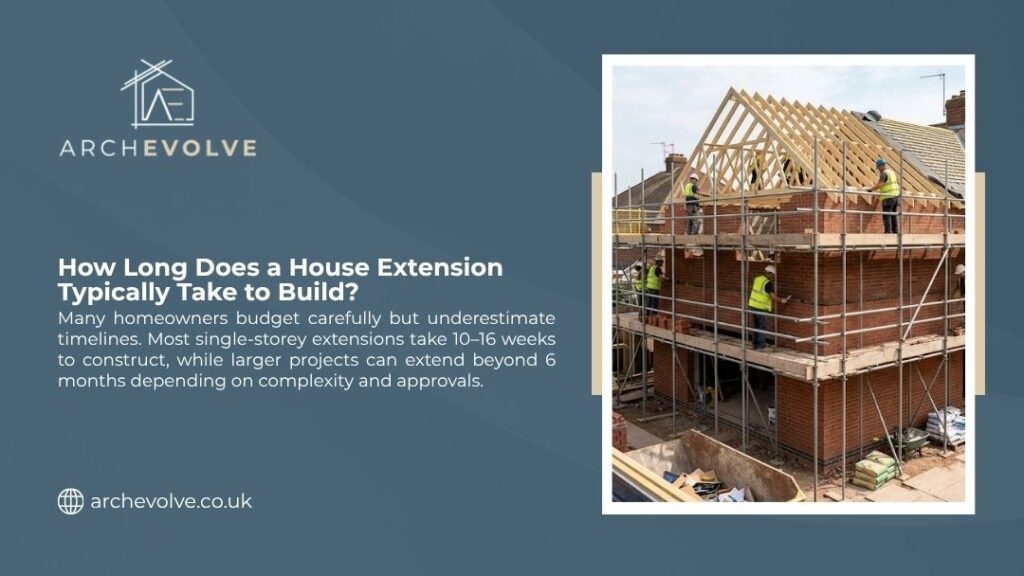
What Affects House Extension Costs?
Size and Layout Complexity
Irregular footprints, split-level transitions, and bespoke structural arrangements carry a premium over simple rectangular plans. Each design complication adds cost.
Settling on what the space genuinely needs before design work begins avoids paying to revise drawings once the project is moving.
Materials and Specification Levels
| Material Tier | Cost Impact | Example Choices |
| Budget | Lower | Standard brick, basic casement windows, laminate flooring |
| Mid-range | Moderate | Flush windows, engineered flooring, tiled finishes |
| Premium | Significantly higher | Aluminium bi-folds, natural stone, roof lanterns, underfloor heating |
Site Access and Existing Property Constraints
Ground conditions are the biggest unknown before excavation starts. Standard strip foundations on stable ground cost between £3,000 and £6,000 for a 25m² extension.
Clay soils, poor drainage, or proximity to large trees can require deeper or more engineered solutions that push that figure noticeably higher.
Location and Regional Labour Costs
Labour rates vary 30 to 40% across the UK. Single-storey construction in London runs at £2,500 to £4,000 per m², compared to £1,500 to £2,500 nationally. Northern England consistently sits at the lower end of UK benchmarks.
The Hidden Costs Most Homeowners Forget to Budget For
Many homeowners focus on the builder’s quote and miss the additional costs sitting alongside construction. A quote that excludes these items is concealing between £3,000 and £8,000 of unavoidable spend.
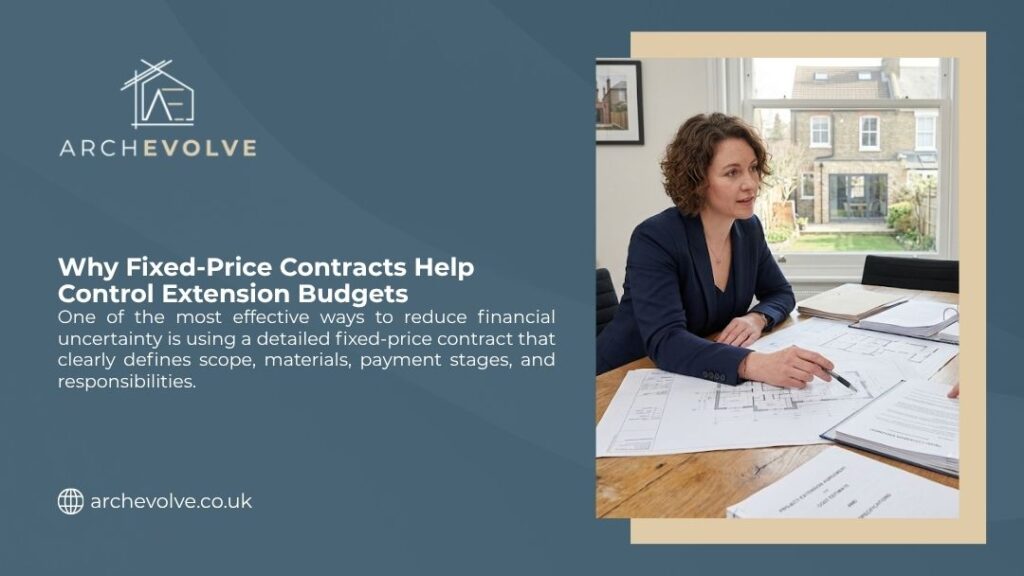
The full project budget typically adds 15 to 25% on top of the core build cost once professional fees, approvals, VAT, and contingency are factored in.
Architect and Design Fees
| Service | Typical Cost |
| Planning drawings | £2,500 to £3,500 |
| Construction-ready technical drawings | £3,750 to £4,500 additional |
| Full architect service | 5% to 12% of construction cost |
Knowing how much architectural drawings cost in the UK helps set realistic expectations before approaching any practice for quotes.
Planning Permission and Building Regulations Costs
These are two separate approvals with entirely different purposes:
- Planning permission controls what can be built and how it affects the surrounding area
- Building regulations govern how the work is constructed, covering structure, fire safety, energy efficiency, and drainage
A full householder planning application in England currently costs £258 in 2026. Building regulations approval adds between £400 and £1,200 depending on the local authority and project scope. Both are required for most extension projects. Our article comparing the two approval routes covers what each application involves and when to submit it. To see where that fee goes, our guide explains what building control inspectors check at each stage of the build.
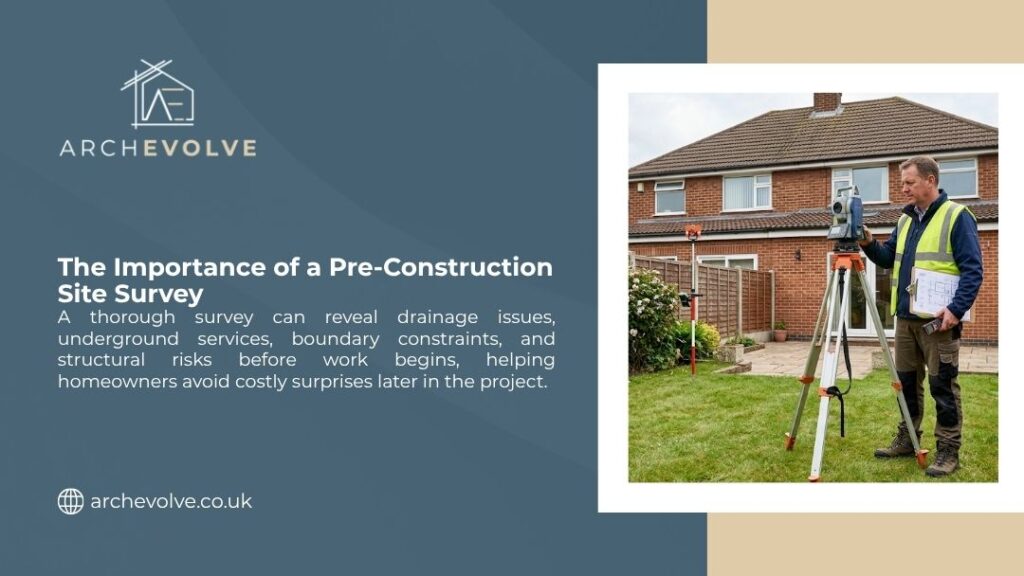
Structural Engineers, Surveys, and Party Wall Costs
| Professional Service | Typical Cost |
| Structural engineer calculations | £500 to £2,000 |
| Party wall agreement (per neighbour) | £700 to £1,500 |
| Mid-terrace property with two neighbours | £3,000 to £7,200 |
| Utility diversions (drains, gas, electrics) | £2,000 to £5,000 |
Party wall agreements are required whenever work is carried out on or near a shared boundary, which applies to most semi-detached and terraced properties.
VAT and Contingency Budgets
VAT at 20% applies to all labour and materials on residential extension work. Most builder quotes are VAT-exclusive, which creates a significant gap between the quoted figure and the final cost.
A contingency of 10 to 15% on the total project is standard practice across the industry. Ground conditions and structural surprises during construction are the most common reasons that contingency is drawn on.
Real House Extension Budget Examples
Seeing a full breakdown is more useful than working from averages alone. Both examples below reflect realistic 2026 all-in costs, including VAT and professional fees.
Example 1: 20m² Single-Storey Rear Extension
| Cost Item | Estimated Cost |
| Construction (20m² at £2,700/m²) | £54,000 |
| Architect fees (8% of build) | £4,320 |
| Planning application | £258 |
| Building regulations approval | £800 |
| Structural engineer | £900 |
| Party wall agreement (1 neighbour) | £1,200 |
| VAT on construction (20%) | £10,800 |
| Contingency (10%) | £7,228 |
| Total All-In Budget | £79,506 |
Example 2: 40m² Double-Storey Extension
| Cost Item | Estimated Cost |
| Construction (40m² at £2,400/m²) | £96,000 |
| Architect fees (10% of build) | £9,600 |
| Planning application | £258 |
| Building regulations approval | £1,100 |
| Structural engineer | £1,500 |
| Party wall agreement (1 neighbour) | £1,500 |
| VAT on construction (20%) | £19,200 |
| Contingency (10%) | £12,916 |
| Total All-In Budget | £142,074 |
Does a House Extension Add Value to Your Property?
A well-executed extension consistently returns more than it costs, provided the build quality is high and the local market supports it.
Data from the FMB and HomeOwners Alliance indicates that extensions add 10 to 20% to property value and typically return £1.20 to £1.50 for every £1 spent.
For context, the average cost of moving house in the UK in 2026 is £13,018 nationally, rising to approximately £33,000 in London. None of that spend adds value to the property purchased.
Which Extensions Deliver the Best Return?
| Extension Type | Potential Value Increase | Key Benefit |
| Open-plan kitchen extension | 10 to 15% | Highest ROI for single-storey builds |
| Double-storey extension | Up to 12% | Adds bedrooms and bathrooms |
| Combined loft and extension | 20 to 30% | Largest total value uplift |
| Side return extension | 5 to 8% | Strong return for terraced properties |
When an Extension May Not Be Worth It
Over-improving relative to local sold prices limits the financial return. If comparable properties in the area consistently sell at £350,000, spending £120,000 on a large extension programme is unlikely to recover that investment at sale.
The value case is strongest when the extension brings the property in line with what the local market actively demands, whether that is additional bedrooms, open-plan living, or more kitchen-diner space.
How to Reduce House Extension Costs Without Compromising Quality
Simplify the Design
A rectangular footprint with a flat or lean-to roof is consistently cheaper than irregular shapes, complex rooflines, or bespoke structural arrangements.
Every design complication carries a cost. Clear decisions before design begins prevent paying to revise drawings once the project is moving forward.
Plan Thoroughly Before Construction Starts
Changes made during construction cost significantly more than changes made on paper. Clear design decisions before a builder is appointed prevent variations on site, which are among the most common reasons extension budgets overrun.
Choose Materials Strategically
| Strategy | Potential Saving | Consideration |
| Standard brick over specialist cladding | £2,000 to £5,000 | Match existing property materials |
| Flat roof over pitched | £3,000 to £8,000 | Review long-term maintenance costs |
| Fixed windows over bi-fold doors | £5,000 to £10,000 | Affects natural light levels |
| Standard door and window sizing | £1,000 to £3,000 | Reduces lead times and material costs |
Confirming the depth your property can extend under permitted development before design work starts prevents commissioning drawings for a scheme that exceeds the allowable limits, one of the most common and avoidable budgeting mistakes.
Frequently Asked Questions About House Extension Costs
How much does a house extension cost UK in 2026?
The average cost of a house extension in the UK in 2026 is around £55,000 for a standard single-storey build. A fully completed 20 to 30m² rear extension typically runs between £55,000 and £100,000 all-in, including VAT and professional fees.
What is the average cost per square metre for an extension?
A fully finished single-storey extension costs between £2,200 and £3,200 per m² in 2026. Double-storey extensions cost slightly less per m² at £2,000 to £2,800. London and the South East attract a 25 to 40% premium on national benchmarks.
Is it cheaper to extend or move house?
In most cases, extending is more cost-effective. The average cost of moving house in the UK is £13,018 nationally in 2026, rising to around £33,000 in London. That spend does not add value to the property purchased.
Do I need planning permission for a house extension?
Most single-storey rear extensions fall under permitted development and do not require a formal application, provided they stay within the depth, height, and boundary limits under the GPDO.
Larger extensions, those in conservation areas, or builds exceeding permitted development thresholds require a full householder application, which currently costs £258 in England.
What are the biggest hidden costs of a house extension?
The most commonly underestimated costs are architect and technical drawing fees, building regulations approval, structural engineer calculations, party wall agreements on semi-detached or terraced properties, 20% VAT on all labour and materials, and a construction contingency of 10 to 15%.
A Realistic Budget Is the Foundation of Every Successful Extension
The homeowners who run into problems are usually those who work from rough averages, overlook professional fees and VAT, or commission drawings before confirming what their site, budget, and planning position can realistically support.
Archevolve guides UK homeowners through every stage, from initial feasibility and design through to planning submission, building regulations sign-off, and construction documentation.
We have more than 15+ years of experience and completed more than 500 projects across residential extensions and conversions.
Get in touch with Archevolve today and find out exactly what your extension project is likely to cost before any money is committed.