
How much does a loft conversion really cost in the UK once you factor in stairs, insulation, building regulations, and all the extras?
Most homeowners start with a headline figure and end up spending considerably more.
A complete loft conversion cost breakdown UK gives you something far more useful than a single average, because costs shift based on conversion type, structural complexity, and what the builder’s quote actually covers.
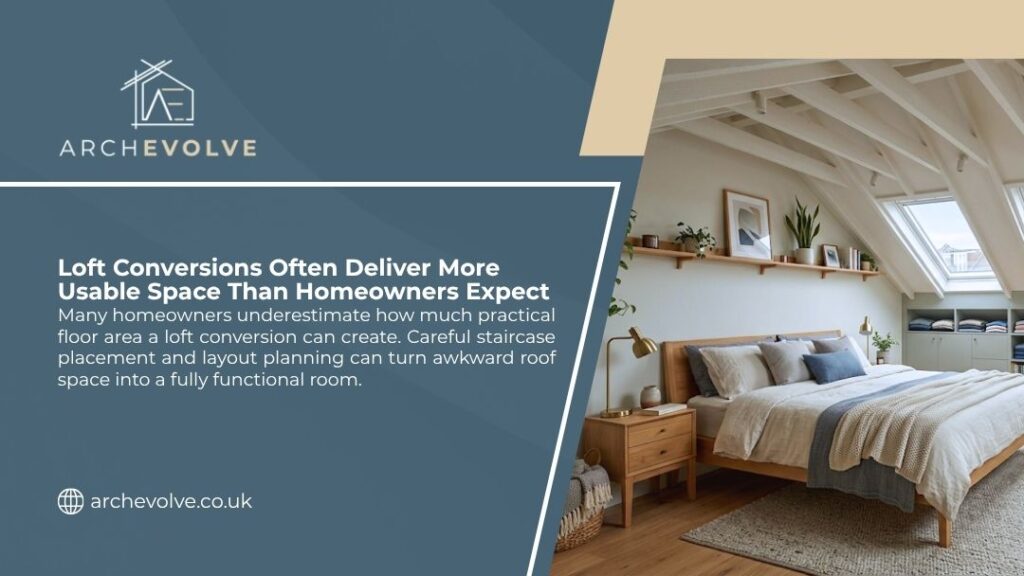
Loft Conversion Cost Breakdown UK: What You Should Budget For
In 2026, most UK loft conversions cost between £27,500 and £75,000, with the average sitting around £50,000. Labour accounts for 40-60% of the total.
This guide covers where the money goes, what drives costs up or down, and how to build a realistic budget before speaking to any contractor.
| Conversion Type | Typical Cost Range | Planning Required? | Build Time |
| Velux (rooflight) | £20,000 – £35,000 | Usually not | 4-6 weeks |
| Rear dormer | £35,000 – £60,000 | Usually not | 6-10 weeks |
| Hip-to-gable | £45,000 – £80,000 | Usually not | 10-14 weeks |
| Mansard | £45,000 – £80,000+ | Usually yes | 12+ weeks |
Before you look at quotes, it helps to understand what a loft conversion budget is actually made of. The builder’s price is rarely the complete picture.
A full loft conversion cost breakdown UK covers several spend areas that often get missed:
- Structural steelwork and floor joists
- Insulation to building regulation standards
- Staircase design and installation
- Roof windows, dormers, or full roof alterations
- Electrics, plumbing, and fire safety measures
- Plastering, decoration, and flooring
- Professional fees (architect, structural engineer, building control)
Knowing what architectural drawings costs in the UK typically helps identify which professional fees may or may not be covered in a builder’s quote from the outset.
| Cost Category | What It Covers | Usually in Builder Quotes? |
| Structural steelwork | RSJs, floor beams, load-bearing changes | Often |
| Insulation | Thermal and sound upgrades | Often |
| Staircase | Design, materials, and installation | Often |
| Electrics and fire alarms | Wiring, sockets, and smoke detectors | Sometimes |
| Professional fees | Architect, structural engineer, building control | Rarely |
| Finishing | Plastering, flooring, and decoration | Sometimes |
Professional fees alone typically add £8,000 to £20,000 on top of the build cost. Treating the builder’s figure as the total is where most budgets fall short.
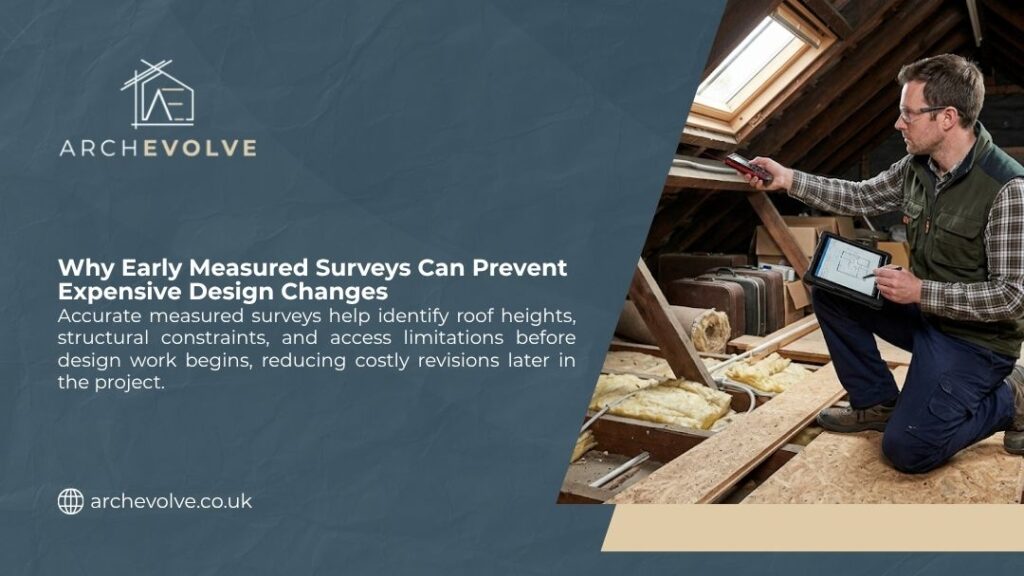
What Affects the Price of a Loft Conversion?
Two loft conversions on the same street can differ by £30,000 or more. Conversion type drives over 60% of that variance, with structural complexity, roof shape, location, and finish level each pulling the price in different directions.
| Cost Driver | Low-Cost Scenario | High-Cost Scenario |
| Conversion type | Velux – minimal structure | Mansard – full reconstruction |
| Location | Midlands or North England | London or South East (+20-40%) |
| Head height | Existing clearance sufficient | Major roof alterations needed |
| Finish level | Standard specification | High-spec bespoke finishes |
| Site access | Open, easy access | Urban or restricted access |
Roof Structure and Head Height
A loft that looks usable from the outside may still need significant structural work inside. Building regulations require a minimum height of 2.2 metres for any habitable loft room.
If that clearance does not already exist, roof alterations become part of the budget from day one.
Most loft conversions also require structural steelwork (RSJs) to carry the new floor load. That cost is non-negotiable regardless of conversion type.
Loft Conversion Types and How Their Costs Compare
Any loft conversion cost breakdown UK should account for conversion type first, as it has the single greatest influence on the final figure. Before requesting quotes, it helps to understand what each option involves structurally.
| Conversion Type | Typical Cost (30m²) | Best For | Main Drawback |
| Velux/rooflight | £20,000 – £35,000 | Properties with existing headroom | Limited usable floor area |
| Rear dormer | £35,000 – £60,000 | Terraced and semi-detached homes | More structural work than Velux |
| Hip-to-gable | £45,000 – £80,000 | Semi-detached or detached with hipped roofs | Longer build, more complex |
| Mansard | £45,000 – £80,000+ | Period properties and conservation areas | Most expensive, usually requires planning |
Which Loft Conversion Type Is Usually the Cheapest?
The Velux conversion sits at the lower end of the loft conversion cost breakdown UK range. It keeps the roofline intact, uses off-the-shelf products, and typically completes in 4-6 weeks.
Comparing the cost per square metre against a house extension cost in the UK often puts it ahead, though the usable floor area gained is smaller.
That said, the cheapest is not always the best return. Research from Nationwide (October 2025) found that adding a bedroom and bathroom through a loft conversion can increase a home’s value by up to 24%.
A simple rooflight room delivers far less of that uplift compared to a rear dormer with a proper en-suite.
Hidden Costs Most Homeowners Forget
The quote looks manageable until the extras start appearing. Several cost areas consistently fall outside builder quotes, surfacing only once contracts are signed or work begins on site.
| Hidden Cost | Why It Appears | Typical Impact |
| Structural engineer | Required for every conversion | £400 – £1,300+ |
| Scaffolding | Required for roof access | £1,500 – £4,000 |
| Party wall surveyor | Required for terraced and semi-detached | £700 – £2,000 per neighbour |
| Building control fee | Mandatory for all conversions | £500 – £900 |
| Skip hire | Waste removal during build | £400 – £800 |
| Decoration and flooring | Rarely included in build quotes | £2,000 – £5,000+ |
| En-suite bathroom | Usually quoted separately | £8,000 – £15,000 |
Planning without these items is how a £40,000 quote becomes a £55,000 project. Hidden finishing costs alone can add 10-15% to the total quoted figure, according to 2026 Checkatrade pricing data.
Why Stairs and Fire Safety Often Add More Than Expected
The staircase is not just an access feature – it can reshape the whole loft layout. Building regulations require a permanent staircase with at least 1.9 metres of clear headroom at the centre, a maximum pitch of 42 degrees, and full compliance with fire escape standards.
Where the staircase forms part of the escape route, it must be enclosed with fire-resisting construction. Budget £3,000 to £4,000 for building regulation compliance work specifically, separate from the staircase installation itself.
Planning Permission, Building Regulations, and Budget Impact
Planning permission and building regulations are not the same thing. Our guide on who signs off design versus construction explains the role of each authority in more depth. Both carry separate costs, timelines, and consequences – and both affect the overall loft conversion cost breakdown UK figure when overlooked.
| Planning Permission | Building Regulations | |
| What it covers | Design, appearance, site impact | Structural safety, fire protection, insulation |
| Who reviews it | Local planning authority | Building control officer |
| Always required? | No – many projects use permitted development | Yes – no exceptions |
| Typical cost | £258 in England (2026) | £500 – £900 |
| Risk of skipping | Enforcement notice, forced reversal | Legal liability, complications at resale |
Do You Always Need Planning Permission for a Loft Conversion?
Most loft conversions in England fall under permitted development rights and do not require a formal planning application. That does not remove the need for building regulations approval – those apply in every case.
If the project qualifies, a Certificate of Lawful Development (£103 in England, 2026) confirms lawful status and protects you at resale.
The rules around planning permission for a loft conversion depend on volume limits, property type, and location.
Where a full application is required – typically for mansard conversions or conservation area properties – the fee is £258 in England.
An analysis of 28,968 planning decisions across 85 UK councils found an 86% national approval rate for loft conversion applications that required full planning permission.
Key permitted development volume limits to be aware of:
- Terraced houses: additional roof space must not exceed 40 cubic metres
- Detached and semi-detached: the limit rises to 50 cubic metres
- Flats and maisonettes: not covered by permitted development rights
- Conservation areas: restrictions apply to visible dormers and roof extensions
How to Budget Realistically Before You Get Quotes
A realistic loft conversion cost breakdown UK must account for more than the build cost alone. The best budget leaves room for what the project actually involves.
| Budget Component | Estimated Range |
| Base build cost | £20,000 – £65,000 |
| Professional fees | £3,000 – £8,000+ |
| Compliance costs | £2,000 – £5,000 |
| Finishing (flooring, decoration) | £2,000 – £6,000 |
| Contingency (10-15%) | £3,000 – £9,000 |
What Should Be Included in a Proper Loft Conversion Quote?
A quote that leaves out major line items is not a cheaper project – it is an incomplete one. Before accepting any figure, confirm that the following are priced in:
- Scaffold erection and removal
- Structural steelwork and engineer sign-off
- Insulation to current building regulation standards
- Staircase design and installation
- Fire doors and escape route protection
- Waste removal and skip hire
- Building control inspection fees
How Much Contingency Should You Allow?
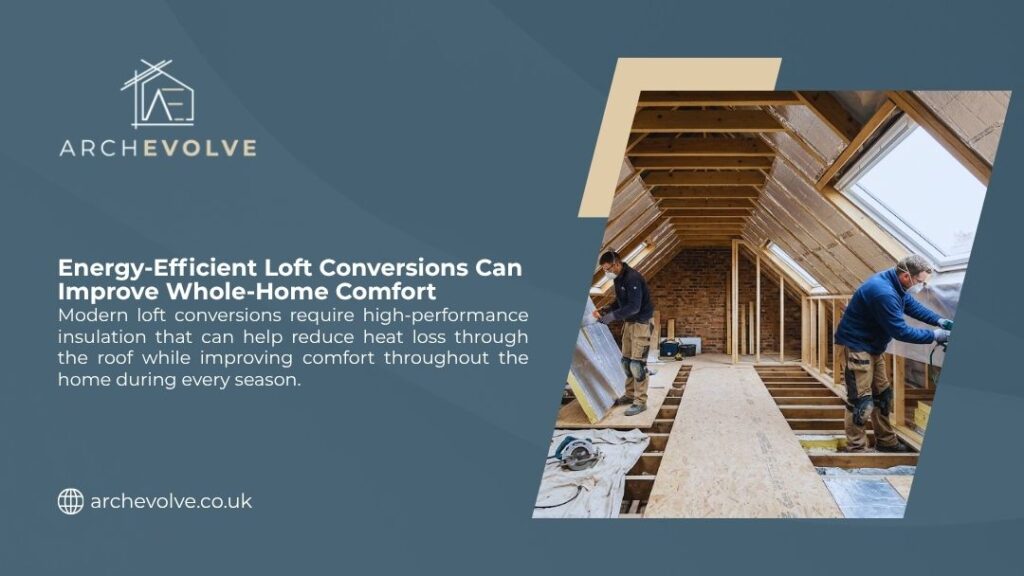
Set aside a minimum of 10-15% on top of the agreed build cost. Loft projects can reveal structural or compliance issues once the roof is opened – issues that were not visible during the initial survey.
Contingency is not about inflating the budget; it is about reducing financial stress when site conditions differ from expectations.
For comparison, a garage conversion average cost in the UK typically carries lower structural uncertainty than a loft project because the shell is already enclosed.
Loft work requires opening the roof, and conditions inside are not always what the survey suggests.
Frequently Asked Questions
How much does a loft conversion cost in the UK?
Most UK loft conversions cost between £27,500 and £75,000 in 2026, with the average around £50,000. Velux conversions start from approximately £20,000, while complex mansard builds can exceed £80,000.
What is included in a loft conversion cost breakdown?
A complete loft conversion cost breakdown covers build costs, structural steelwork, staircase, insulation, electrics, plumbing, and finishing. Builder quotes rarely include structural engineer fees, party wall costs, scaffolding, building control, or internal decoration.
Which loft conversion type is the cheapest?
A Velux or rooflight conversion is the most affordable option, typically £20,000 to £35,000. It does not alter the roofline, completes in 4-6 weeks, and in most cases falls within permitted development rights.
Do I need planning permission for a loft conversion?
Most loft conversions in England fall under permitted development and do not require a planning application. Exceptions include mansard conversions, conservation area properties, and projects exceeding permitted development volume limits.
What are the hidden costs in a loft conversion?
Common hidden costs include structural engineer fees, scaffolding, party wall surveyor fees, building control charges, skip hire, and finishing work. These items typically add £5,000 to £12,000 beyond the builder’s headline quote.
Getting Your Budget Right From the Start
Getting a loft conversion right is less about finding the cheapest quote and more about building a budget that reflects what the project genuinely involves.
Professional fees, building regulation compliance, and finishing work all contribute to the final figure.
Leaving any of them out at the planning stage creates cost pressure mid-build, at exactly the point where changes are most expensive.
With over 15 years of experience and 500+ completed projects across loft conversions, home extensions, and new builds, ArchEvolve supports homeowners across England from early feasibility through to building regulations approval and full construction documentation. Contact Archevolve today to find out exactly what your loft conversion involves and what a realistic budget looks like before any costs are committed.