What if your traditional Storrington flint cottage didn’t have to choose between its historic soul and the modern desire for light? Many homeowners across West Sussex feel that the only way to gain space is to compromise the character of their heritage property. You likely value the tactile beauty of local brickwork but find yourself yearning for a more seamless connection to the South Downs landscape. It’s a common concern that contemporary extensions in glass might feel like an architectural afterthought or, worse, become an unusable greenhouse during the peak of summer.
We understand that a successful evolution of your home requires a meticulous balance of artistic vision and technical performance. This 2026 design guide reveals how a bespoke glass installation can transform your living environment into a light-filled sanctuary while meeting the specific planning nuances of the Horsham District. You’ll learn how an architectural technologist uses advanced solar control and structural thermal breaks to ensure year-round comfort. We provide a clear roadmap through the journey of enhancing your property’s value through sophisticated, transparent design that respects the past while embracing the future.
Key Takeaways
- Understand how advanced thermal engineering and U-value science transform glazed spaces into energy-efficient, year-round sanctuaries for Storrington homes.
- Discover the distinct design profiles of bespoke extensions in glass, ensuring your project creates a seamless and sophisticated dialogue with your property’s existing character.
- Gain clarity on navigating West Sussex planning permissions and Permitted Development rights, including specific considerations for sensitive sites within the South Downs National Park.
- Learn how our architectural technologists utilise 3D visualisations to refine your vision and provide technical reassurance throughout the design and delivery journey.
The Evolution of Light: Defining Modern Extensions in Glass
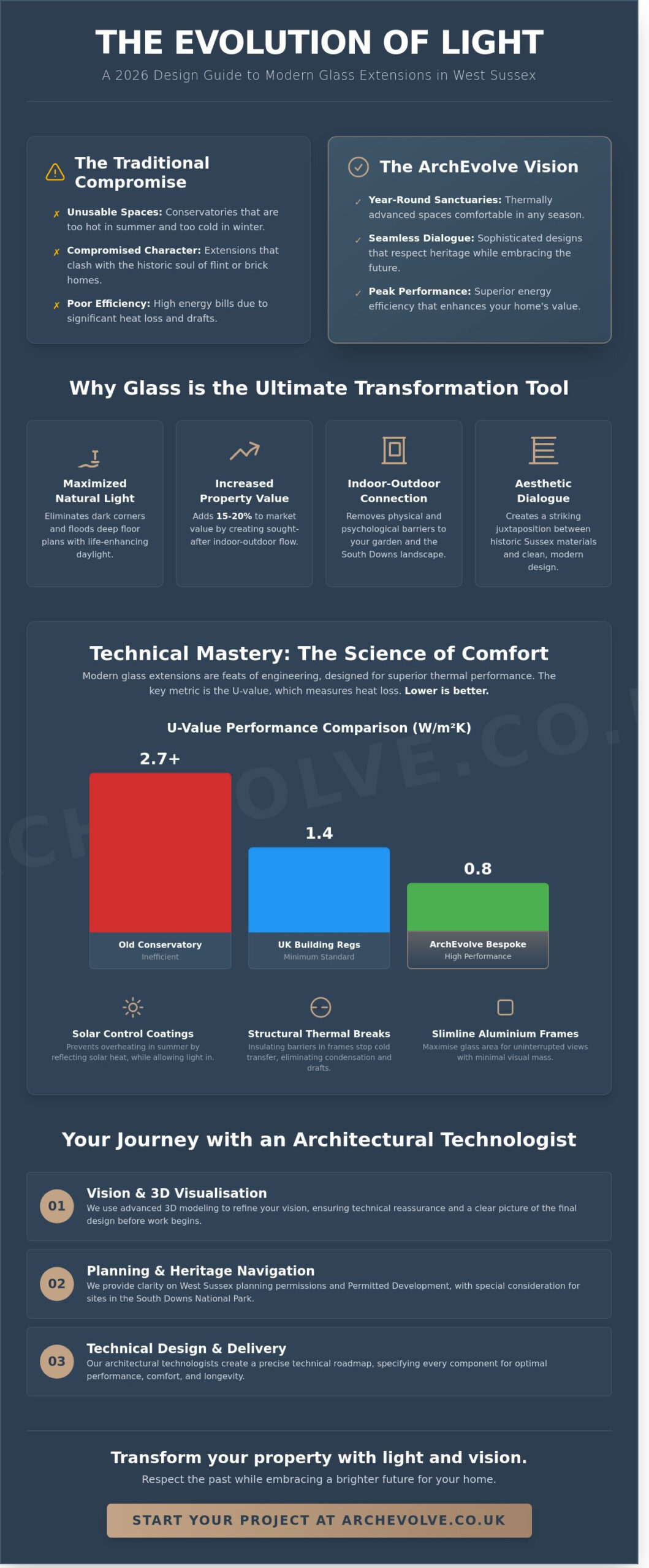
Modern extensions in glass represent a radical departure from the drafty, seasonal conservatories that were prevalent in the 1980s. Today, an architectural technologist uses high-performance structural glazing to create thermally efficient living spaces that remain comfortable even when temperatures in West Sussex drop toward freezing. These structures aren’t just additions; they’re meticulous evolutions of the home. The history of architectural glass shows how we’ve moved from fragile material to load-bearing panels that achieve U-values as low as 1.0 W/m²K. This technical leap allows Storrington homeowners to enjoy panoramic views of the South Downs without sacrificing energy efficiency. It’s about a permanent, year-round connection to the environment.
The emotional impact of these spaces is profound. For residents in the village, “bringing the outside in” isn’t a mere design cliché; it’s a lifestyle enhancement. Large-format glazing removes the psychological barriers between the domestic interior and the garden. It creates a sense of sanctuary. The play of light across a room throughout the day changes the atmosphere, shifting from the crisp clarity of a Sussex morning to the soft, golden hues of a South Downs sunset. This connection to the natural world reduces stress and fosters a feeling of openness that traditional masonry extensions simply can’t replicate.
The Aesthetic Impact on Storrington Homes
Storrington’s architectural heritage is defined by the rich textures of Sussex flint and warm, traditional brickwork. Introducing extensions in glass creates a striking visual dialogue between the historic and the contemporary. It’s a bold juxtaposition that respects the past while embracing the future. By using slimline aluminium frames, we create a seamless transition to the rolling landscapes. A glass box extension is a minimalist design statement that uses transparency to reduce visual mass, allowing the original property’s character to shine through. This approach ensures that even the most modern addition feels grounded in its historic context.
Why Glass is the Ultimate Tool for Property Transformation
Light is the most vital element in any home. For north-facing gardens or properties overshadowed by mature trees, glass is the only solution that truly floods a floor plan with natural illumination. It’s incredibly versatile. Whether you’re envisioning a sun-drenched kitchen-diner, a tranquil home office, or a detached garden room, structural glazing adapts to your lifestyle. We often see these projects add between 15% and 20% to a property’s market value by creating that sought-after indoor-outdoor flow. For those beginning their renovation journey, The Ultimate Guide to House Extensions in Storrington offers deep insights into local design trends and planning requirements.
- Maximized Light: Eliminates dark corners in deep floor plans.
- Thermal Performance: Solar control coatings prevent overheating in summer.
- Structural Integrity: Modern glass can support its own weight and wind loads without bulky supports.
- Bespoke Design: Frameless systems offer an uninterrupted view of the West Sussex countryside.
Technical Mastery: Ensuring Year-Round Comfort in Glazed Spaces
Designing extensions in glass requires more than aesthetic vision; it demands rigorous engineering to ensure the space remains habitable throughout the fluctuating British seasons. The primary concern for Storrington homeowners is often thermal regulation. Without precise specification, a glazed room risks becoming a greenhouse in July or an icebox in January. Our approach centres on the science of U-values. A U-value measures the rate of heat loss through a material, and current UK Building Regulations typically require a value of 1.4 W/m²K or lower for new glazing installations. By working with a skilled architectural technologist, you can achieve values as low as 0.8 W/m²K, surpassing standard requirements and enhancing your home’s overall energy profile. This technical precision is vital when consulting the official planning permission guidance to ensure your project meets both aesthetic and legal standards.
Advanced Glass Technologies for 2026
By 2026, high-performance glazing will be the standard for luxury Sussex builds. Solar control glass is essential. It uses a microscopic coating to reflect up to 75% of solar heat while allowing natural light to flood the interior. For winter comfort, we specify argon-filled units with Low-E (low-emissivity) coatings. These reflect internal heat back into the room. For those hard-to-reach glazed roofs, self-cleaning glass utilizes UV rays to break down organic dirt, which is then washed away by rainfall. This reduces maintenance and keeps the connection to the West Sussex sky crystal clear.
Structural Integrity and Framing Options
The skeletal structure of your extension dictates its visual impact. Slimline aluminium frames offer sightlines as narrow as 20mm, providing a modern, industrial edge. For a more ethereal look, frameless structural glass uses toughened laminates to support the weight of the roof without visible pillars. Meticulous drainage is non-negotiable. We design bespoke guttering systems that are often concealed within the frame to prevent water ingress during heavy downpours. Integrating bifold doors or flush-threshold sliding systems creates a seamless transition to the garden. If you’re considering how these elements might fit into your property, exploring bespoke design options can help clarify the possibilities.
The evolution of extensions in glass has moved from simple conservatories to sophisticated, year-round living spaces. It’s a journey of balancing light with logic. Every pane of glass and every aluminium joint is a deliberate choice made to enhance your lifestyle while respecting the heritage of the Storrington landscape. This technical foundation ensures that your investment provides comfort for decades, not just seasons.
Designing for Synergy: Choosing the Right Style for Your Project
Selecting the perfect design for extensions in glass requires a meticulous evaluation of your home’s existing character. The architectural journey begins by identifying which of the three primary archetypes; the lean-to, the glass box, or the infill; best complements the structural evolution of your property. A successful design respects the original scale. It ensures the new addition feels like a natural progression rather than a jarring attachment. This balance is achieved through a deep understanding of massing and materiality.
Positioning is paramount. The sun’s path across a Storrington garden dictates the emotional resonance of the interior throughout the day. A south-facing extension requires careful consideration of solar gain, while a north-facing space demands maximum transparency to capture ambient light. By analyzing the technical specifications for modern glazing, our architectural technologists ensure that U-values and solar control coatings work in harmony with your home’s thermal needs. This technical mastery prevents the overheating issues common in dated conservatory designs.
To achieve true synergy, the interior must flow without interruption. Using the same large-format porcelain tiles for both the kitchen and the external terrace creates a seamless transition. This visual trick blurs the boundary between indoors and out. It makes the space feel significantly larger than its physical footprint suggests. Lighting also plays a critical role. Recessed spotlights combined with discreet floor-level LEDs maintain the glass’s transparency at night, preventing the “black mirror” effect that can occur after sunset.
The Side-Return Infill: A Storrington Favourite
Many Victorian and Edwardian properties in Storrington feature narrow, underutilised alleys that offer untapped potential. Transforming these into side-return extensions in glass creates expansive, light-filled kitchen-diners. High-performance glass roofs pull natural light deep into the core of the home, illuminating areas that were previously dark and claustrophobic. Local property data indicates that side-return extensions offer the highest ROI for smaller plots, frequently adding between 10% and 15% to a home’s total market value upon completion.
The Contemporary Glass Box
For detached homes overlooking the South Downs, the contemporary glass box represents the pinnacle of modern design. This style prioritises unobstructed views and minimalist aesthetics. Through clever architectural drafting, it’s possible to achieve a “floating roof” effect where the ceiling appears to hover without visible support. This creates a striking silhouette that celebrates high-end craftsmanship and structural innovation. To explore how these structures can be tailored to your property, consider our Bespoke Architectural Design Services in Storrington.
Navigating Planning Permission and Heritage in West Sussex
The evolution of a home often begins with a vision of light, yet the path to realization is paved with complex regulatory requirements. In Storrington, understanding Permitted Development rights is the first step in this transformative journey. While many smaller extensions in glass may fall under these rights, the local landscape introduces unique variables that require professional oversight. An architectural technologist acts as your guide, translating aesthetic aspirations into a technical framework that satisfies both local authorities and national standards. This meticulous preparation ensures that your project moves forward without the friction of unexpected legal hurdles.
Planning in Sensitive Local Areas
Storrington’s proximity to the South Downs National Park adds a layer of prestige and responsibility to any build. Since the park was designated an International Dark Sky Reserve in May 2016, light pollution has become a primary concern for planning officers. Large extensions in glass must mitigate upward light spill to protect this status, often requiring specific glazing specifications. When working with Grade II listed buildings, the challenge intensifies. The goal is to create a seamless dialogue between historic masonry and modern transparency. Early engagement with Horsham District Council ensures that the design respects the heritage of West Sussex while enhancing the lifestyle of the inhabitants. This collaborative approach turns potential restrictions into creative opportunities for refinement.
The Technical Path to Approval
Technical specification is the silent backbone of every successful project. It’s the bridge between a conceptual sketch and a safe, habitable space. A comprehensive building regulation package is essential to prevent costly delays on site. This documentation includes detailed calculations for Part L thermal performance to ensure the structure remains energy efficient throughout the seasons. Structural safety and fire regulation compliance are equally vital, particularly in bespoke glass designs where traditional support systems are absent. Your architectural technologist manages this complex data, ensuring the design meets the rigorous demands of UK building standards. By preparing these documents with precision, you avoid the common pitfalls that stall construction. This level of detail provides the practical reassurance needed to transition from the planning phase into active construction with absolute confidence.
The ArchEvolve Journey: Visualising Your Glass Extension
Every ambitious home improvement begins with a single spark of inspiration. At ArchEvolve, we guide you through a meticulous journey that transforms that initial thought into a physical reality. Our bespoke design process is rooted in feasibility, ensuring that your aspirations for extensions in glass are both structurally sound and aesthetically breathtaking. We don’t believe in off-the-shelf solutions. Instead, we focus on an evolution of space that respects the existing character of your property while introducing modern, sustainable elements.
Collaborating with a local architectural draftsman who understands the specific nuances of Storrington is vital. The local landscape, from the rolling South Downs to the historic textures of the village centre, influences every design choice we make. This local expertise ensures your project feels like a natural enhancement rather than an awkward addition. We bridge the gap between creative vision and technical execution, providing a seamless experience that prioritises your long-term lifestyle goals.
Seeing is Believing: 3D Rendering
Visualising how light will dance across a new living area can be difficult with traditional sketches. Our photorealistic 3D renders change that. They allow you to experience the atmosphere of your new room at different times of day, from the bright midday sun to the soft hues of twilight. This process is essential for de-risking your investment; it ensures you’re entirely confident in the design before construction begins.
These high-fidelity models are also a strategic asset during the planning phase. When proposing ambitious extensions in glass to Horsham District Council, showing exactly how the structure sits within its environment can significantly smooth the path to approval. Detailed visualisations demonstrate a commitment to quality and architectural harmony. You can see examples of how we bring concepts to life by viewing our work on 3D Visualisations in Storrington.
Your Next Steps Toward Transformation
The transition from a conceptual dream to a technical specification requires precision and expert oversight. It starts with an initial consultation where we sit down to identify your specific needs. We look at how you move through your home and where the current layout fails to meet your requirements. Whether it’s a desire for a more sustainable thermal envelope or a need for a seamless indoor-outdoor flow, we document every requirement.
Once the concept is finalised, our team manages the complex technical details. We handle everything from structural load calculations to the fine points of Building Regulations. This ensures your high-quality living space is built to last. It’s time to stop imagining and start building the future of your home. Book a consultation with our architectural technologists to begin your own design evolution.
Evolution Through Light and Structure
Enhancing a Storrington home requires a meticulous approach that respects local heritage while embracing 2026 design innovations. We’ve explored how modern extensions in glass serve as a bridge between your interior sanctuary and the natural beauty of the West Sussex landscape. Achieving this balance requires technical mastery, particularly when navigating the specific planning constraints of the South Downs National Park. Our architectural technologist team ensures every project meets these rigorous standards without compromising on your aesthetic vision.
By utilizing sophisticated 3D visualisation, we bring your concepts to life long before the first stone is laid. This process focuses on functional elegance and long-term sustainability, ensuring your new space remains thermally efficient and comfortable throughout the seasons. Architecture is a living journey that adapts to your needs; it’s about creating a bespoke environment that enhances your daily life and adds lasting value to your property. Your home’s transformation is a collaborative evolution of style and purpose.
Book your bespoke design consultation in Storrington
Your vision for a more luminous, refined home is within reach. We look forward to helping you transform your living space into something truly extraordinary.
Frequently Asked Questions
Do I need planning permission for a glass extension in Storrington?
You’ll likely require planning permission if your extension exceeds 50% of the land around the original house or if the property sits within the Storrington Conservation Area. Horsham District Council oversees these applications and typically looks for designs that respect the local Sussex character. While some smaller projects fall under Permitted Development rights, bespoke extensions in glass often necessitate a formal application to ensure the structural evolution of the home meets the 2023 National Planning Policy Framework standards.
Will a glass extension make my house too hot in the summer?
Modern solar control glass reflects up to 78% of solar heat, ensuring your living space remains comfortable even during the peak of summer. We specify high performance coatings and argon filled units that regulate internal temperatures with meticulous precision. It’s a significant advancement from traditional glass rooms. By integrating automated ventilation or discreet shading solutions, your new space becomes a functional sanctuary that balances light and thermal comfort throughout the seasons.
How much does a bespoke glass extension typically cost to design?
Architectural design fees for high end residential projects in the UK generally range from 7% to 15% of the total construction budget according to industry benchmarks. This investment covers the detailed technical work performed by an architectural technologist to ensure structural integrity and thermal efficiency. We provide a transparent breakdown of these costs during our initial consultation, ensuring your project’s financial journey is clear and well managed from the very first sketch.
Are glass extensions safe and secure against intruders?
Glass extensions are exceptionally secure when constructed with laminated safety glass and multi point locking systems that meet the PAS 24:2022 security standard. The toughened outer panes are engineered to withstand significant impact, making them as resilient as a traditional brick wall. Your home’s safety is a core priority in our design philosophy. We use high performance hardware that integrates into slimline frames, providing a seamless aesthetic without compromising on the protection of your property.
Can I add a glass extension to a listed building in West Sussex?
You can add a glass extension to a listed building in West Sussex, provided you secure Listed Building Consent from the local authority. Historic England often supports frameless glass structures because they create a clear visual distinction between the original heritage fabric and the modern addition. This sensitive approach allows the history of the building to remain the focal point while enhancing its functionality for a contemporary lifestyle, creating a beautiful dialogue between old and new.
How long does the architectural design process take for a glass extension?
The design phase for a bespoke glass project typically spans 8 to 12 weeks from the initial concept to the completion of technical drawings. This timeframe allows our architectural technologist to refine the aesthetic details and conduct necessary site surveys in Storrington. It’s a collaborative journey where we balance creative inspiration with the practicalities of UK building regulations to ensure a smooth transition into the construction phase of your home’s transformation.
What is the difference between a conservatory and a modern glass extension?
The primary difference lies in thermal performance and structural permanence. A modern glass extension is built for year round habitation, featuring advanced insulation that complies with Part L of the Building Regulations. Unlike traditional conservatories, these extensions in glass often feature minimal framing and high performance glazing. They represent a sophisticated evolution of your home rather than a seasonal addition, providing a space that feels integral to the house’s layout and comfort.
How do I clean and maintain a large glass roof?
Most large glass roofs now feature self cleaning coatings that use UV rays to break down organic dirt, which is then washed away by rainwater. For the best results, we recommend a professional reach and wash service twice a year to maintain the pristine clarity of the glazing. Regular maintenance of the drainage channels and seals ensures the long term integrity of the structure. This simple care routine preserves the seamless connection between your interior and the surrounding landscape.