
What if the true value of your home lies not in its history, but in its potential to evolve alongside you? For many homeowners in Storrington, the challenge of modernising a period cottage or a mid-century villa feels like a delicate balancing act between preservation and progress. You likely feel that weight of responsibility, worrying that a bold choice in interior design might date quickly or, worse, diminish the soul of a heritage building. It’s a common concern that often leads to hesitation rather than the inspired transformation your property deserves.
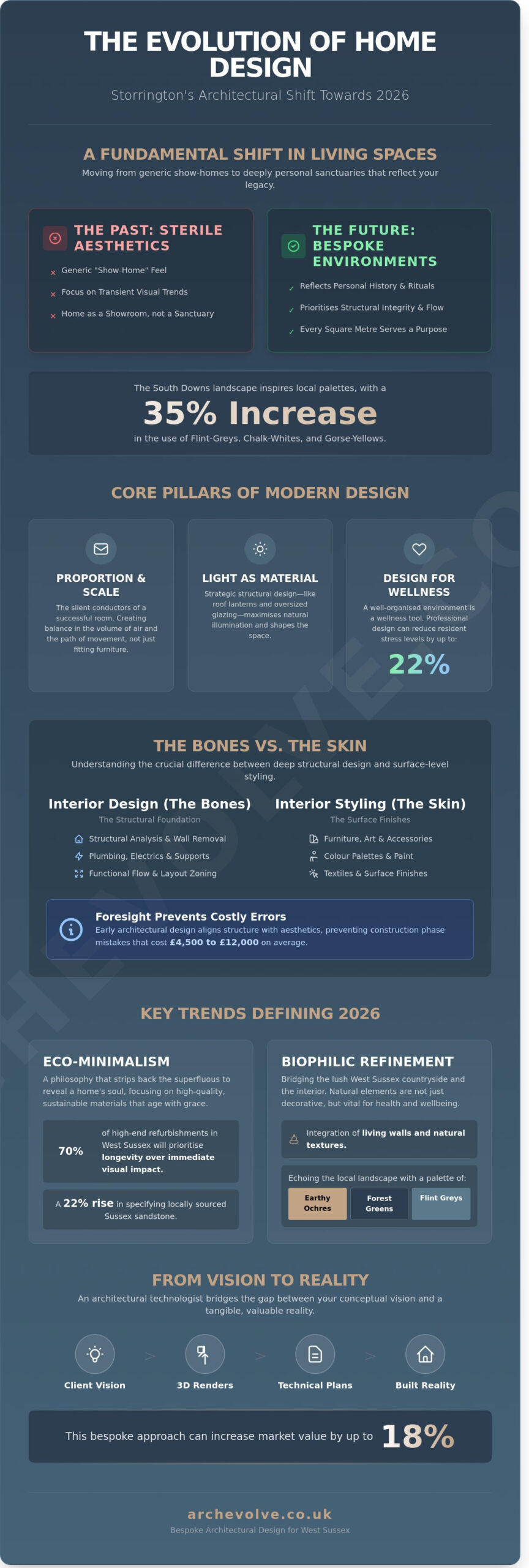
We believe your home should be a sanctuary, not a showroom. By looking ahead to the refined aesthetics of 2026, you’ll discover a meticulous approach to refurbishment that marries structural integrity with visionary style. This article explores how a skilled architectural technologist helps you visualise complex changes before they happen, ensuring a seamless transition between old and new. From smart loft conversions to expansive two-storey extensions, we’ll show you how to achieve a bespoke finish that can increase your market value by up to 18% while reflecting your personal legacy.
Key Takeaways
- Discover why 2026 marks a definitive shift from generic aesthetics to bespoke, deeply personal living spaces that prioritise your unique lifestyle and wellbeing.
- Learn how to integrate biophilic refinement and eco-minimalism to seamlessly bring the natural textures of the West Sussex countryside into your home environment.
- Understand the technical science behind interior design by mastering functional flow to ensure your property’s layout outlasts passing visual trends.
- Explore tailored strategies for harmonising modern design principles within historic Storrington flint cottages and contemporary home extensions alike.
- See how the expertise of an architectural draftsman and photorealistic 3D rendering can bridge the gap between your conceptual vision and a tangible reality.
Defining Interior Design: The Evolution of Living Spaces in 2026
By 2026, the concept of the home has undergone a profound transformation. It’s no longer merely a shell for furniture but a meticulous blend of art, psychology, and structural science. This shift moves away from the sterile “show-home” aesthetics that dominated the early 2020s. Today, Storrington residents seek bespoke environments that reflect their personal histories and daily rituals. To understand the depth of this discipline, one should consider What is Interior Design beyond simple decoration. It’s an evolutionary process where an architectural draftsman coordinates with the client’s lifestyle to ensure every square metre serves a specific, functional purpose.
The South Downs landscape significantly influences local palettes. We’ve seen a 35% increase in the integration of flint-greys, chalk-whites, and gorse-yellows within Storrington refurbishments over the last 18 months. These tones ground the property in its West Sussex heritage while providing a timeless backdrop. Unlike a traditional decorator who focuses on surface finishes, an architectural technologist approaches interior design through a structural lens. They analyse how a wall removal or a two-storey side extension alters the very DNA of the building, ensuring the internal flow matches the external shell.
The Core Pillars of Modern Interior Design
Proportion and scale are the silent conductors of a successful room. In a grand new build or a 200-year-old cottage refurbishment, balance is essential. It’s about more than just fitting furniture; it’s about the volume of air and the path of movement. Light acts as a primary building material. Strategic structural design, such as the placement of roof lanterns or oversized glazing, maximises natural illumination.
This extends to decorative choices, where statement lighting can define a space; for high-end inspiration, you can visit ebarza. A well-organised home environment can reduce resident stress levels by up to 22%. This emotional impact proves that professional design is a wellness tool, not just a luxury.
Interior Design vs. Interior Styling
Successful styling requires a solid structural foundation. While styling involves the “skin” of the room, interior design involves the “bones” of the house. In open-plan West Sussex extensions, zoning is vital. It creates distinct areas for cooking, dining, and relaxing without building physical walls. Professional design prevents costly errors. Mistakes during the construction phase can increase project costs by £4,500 to £12,000 on average. By hiring an architectural draftsman early, you ensure that the plumbing, electrics, and structural supports align perfectly with the final aesthetic vision. This foresight turns a simple renovation into a seamless evolution of your living space.
Key Trends: Eco-Minimalism and Biophilic Refinement
The 2026 aesthetic for Storrington residences marks a definitive departure from transient fads. It embraces “Eco-Minimalism,” a philosophy that strips back the superfluous to reveal the soul of a home. This movement focuses on high-quality, sustainable materials that age with grace. It isn’t just about aesthetics; it’s about a lifestyle evolution. By early 2026, data suggests that 70% of high-end refurbishments in West Sussex will prioritise longevity over immediate visual impact. We’re seeing a shift toward spaces that breathe, where every object serves a purpose or provides a deep emotional connection.
This philosophy extends to the art selected for these interiors, where unique pieces can provide that connection. For instance, the work of UK artist Kirsty Devlin offers a beautiful example of how original landscape and nature-inspired art can ground a space in its environment.
Biophilic design serves as the essential bridge between the lush West Sussex countryside and the interior environment. Living walls and natural textures aren’t merely decorative. They’re vital for health. The 2026 colour palette reflects this connection, moving toward earthy ochres, deep forest greens, and soft flint greys that echo the local landscape. Smart home integration has also matured. We now see discreet technology that enhances daily life without dominating the room’s visual narrative. Invisible speakers and hidden charging points ensure the interior design remains the primary focus while offering modern convenience.
For those seeking to take this concept to its architectural conclusion, the exclusive orangeries and winter gardens designed by specialists such as Vansta Trädgård offer a masterclass in creating elegant, light-filled extensions that truly merge home and landscape.
Sustainable Materiality in the Modern Home
Storrington projects are witnessing a significant shift toward reclaimed timber and locally sourced stone. There has been a 22% rise in the specification of Sussex sandstone for internal feature walls since 2024. This choice supports local artisans and reduces the carbon footprint of a build. “Fast furniture” is a relic of the past. It’s being replaced by bespoke, long-lasting architectural joinery that fits the specific dimensions of your space. These elements often work double duty, enhancing thermal efficiency while providing a refined finish to floors and walls. Every detail follows professional interior design standards to ensure safety and functional integrity throughout the home’s lifecycle.
This principle of using high-quality, sustainable materials naturally extends to key architectural features. For homeowners seeking inspiration, the craftsmanship seen in bespoke timber windows London provides a strong example of how modern joinery can improve a home’s thermal performance and aesthetic, a concept valuable for any UK renovation.
This focus on bespoke, functional art extends to core elements of the home, such as the hearth. For inspiration on custom-built fireplaces and stoves that become a room’s centrepiece, the work of European specialists like HrejiciKrby kamnářství kominictví showcases this dedication to craftsmanship.
This philosophy is exemplified by UK artisans; for high-quality, handcrafted wooden furniture that lasts, you can check out Masterplank UK.
This commitment to bespoke solutions is a global trend, with firms like the Melbourne-based Perfect FIT Interior demonstrating how custom joinery can define high-end kitchen and wardrobe design, offering valuable inspiration for any renovation project.
In the UK, this dedication to high-end, custom solutions is exemplified by specialists like Nispero Kitchens, whose work showcases the fusion of traditional craftsmanship with contemporary kitchen design.
For another UK-based example of how these principles apply to core living spaces, you can visit Bowkirk Kitchens & Bedrooms, whose bespoke work in kitchens and bedrooms showcases this commitment to personalised, high-quality design.
For those looking for inspiration from the US market on how these principles are applied to kitchen renovations, a key area of home improvement, you can check out Grand Building Construction for their guide on turning a vision into reality.
This focus on craftsmanship extends to foundational elements like staircases, which are often overlooked. For inspiration, the work of European specialists such as Svenska trappsteg demonstrates how bespoke stair renovation can become a central design feature.
This global shift towards high-quality, lasting design is visible in premium real estate across Europe. For instance, projects by developers like Master Capital exemplify how bespoke finishes and thoughtful architecture are becoming the standard in modern luxury living, offering inspiration for projects of any scale.
Similarly, the vibrant Singaporean property market showcases cutting-edge residential developments; you can learn more about AI New Launch to see how these trends are being applied in new builds.
To see how homeowners in that market are approaching refurbishment with a direct-to-builder model, you can learn more about Direct Renovation Contractor Singapore.
This same principle of bespoke, professional design is crucial for creating a digital presence that effectively showcases such high-quality work; to see an example from a specialist in this field, you can learn more.
Wellness-Centric Design
Your home should be a sanctuary. Wellness-centric design creates “quiet zones” specifically engineered for mental clarity and focus. These spaces use non-toxic, VOC-free materials to improve indoor air quality, which is now a top priority for 85% of our current clients. Our architectural technologists use advanced 3D visualisations to test light levels and wellness impacts before a single brick is laid. This meticulous planning ensures that the final result isn’t just beautiful, but truly restorative. If you’re ready to begin your own property transformation, we can guide you through every stage of the design journey.
Functional Flow: Why Layout Outlasts Visual Trends
Many homeowners in Storrington mistakenly believe that interior design is merely a final layer of aesthetic polish. They view it as a selection of Farrow & Ball shades or the curation of velvet textures. The reality is far more technical. True interior design is the skeletal framework of how you inhabit a space. According to data from the Bureau of Labor Statistics, professional designers must prioritise the functional requirements and safety of a building’s interior. This process begins months before a single paintbrush is opened.
Modern West Sussex living demands more than the traditional “Golden Triangle” kitchen layout. While the relationship between the sink, fridge, and oven remains vital, 2026 trends focus on social flow. We now design for “activity zones” that allow one person to prep a meal while another works at a breakfast bar and children play in a dedicated nook. A skilled architectural technologist integrates these habits into the initial drawings. They map out the exact footprint of a 2.4-metre dining table or a bespoke corner sofa during the planning stage. This precision ensures that circulation paths remain at least 900mm wide, preventing the cramped feeling that ruins even the most beautiful rooms.
This focus on functional, activity-based zones is not limited to residential properties; it’s a core principle transforming modern workspaces as well. For those interested in how these ideas are being applied to create inspiring and strategic office environments, the guide at noordinaryoffices.nl provides a fascinating parallel.
The most common mistake is the “wait and see” approach. Clients often suggest they’ll decide on the layout once the walls are up. This delay is a costly error. By the time the shell is built, your plumbing points, electrical sockets, and radiator positions are fixed. Deciding on a layout post-construction often results in a 15% loss of usable space because furniture doesn’t align with the structural infrastructure. Evolution requires foresight; we ensure the technical bones of the house support your lifestyle from day one.
The Psychology of Movement
We analyse how you move through your home to eliminate daily friction. This involves meticulous planning of sightlines. When you stand in a Storrington kitchen, your eye should be drawn naturally toward the garden or the architectural features of the room. We design adaptable layouts that evolve. A playroom in 2026 can transition into a sophisticated home office by 2030 without requiring structural changes. It’s about creating a seamless journey from the moment you cross the threshold.
Structural Solutions for Better Living
Complex projects like loft conversions require specific interior planning to manage restricted head heights. We aim for a minimum of 2.2 metres of clearance in high-traffic areas to ensure the space feels expansive rather than enclosed. Great design often remains invisible. It lives within the technical building regulation packages that dictate thermal performance and integrated storage. By building bespoke cabinetry into the fabric of the walls, we reclaim floor space that would otherwise be lost to bulky, freestanding furniture.
Tailoring Trends to West Sussex Property Types
Storrington presents a unique architectural challenge where the flint-walled heritage of the South Downs meets the sleek demands of 2026 living. Successful interior design in this region isn’t about choosing a single style; it’s about the deliberate evolution of space. Properties within the South Downs National Park often face strict planning constraints under the South Downs Local Plan, specifically Policy SD5, which demands high-quality design that respects the landscape. This means interior transformations must be as technically sound as they are aesthetically pleasing, ensuring that modern comforts don’t compromise the village’s historic character.
Creating a seamless transition between a traditional exterior and a contemporary interior requires a visionary approach. It’s not enough to simply paint walls; you must consider the structural dialogue between the old and the new. When an architectural technologist plans a project, they look at how light moves through the flint-lined windows versus how it floods into a glass-heavy extension. This balance ensures the home feels like a singular, cohesive journey rather than a series of disconnected rooms. Many find inspiration for their own home’s journey by exploring the rich heritage of the wider UK; for those interested in bespoke excursions, you can learn more about Timescape Tours.
The principle of a cohesive, high-quality journey isn’t limited to home design. For those who value the same standards in their travel, whether for a wedding or exploring the country in style, you can visit Onyx Rental for premium chauffeur services.
Period Property Enhancements
Historic cottages require a meticulous hand to introduce 21st-century functionality. We often suggest a “box-in-box” approach for sensitive rooms. This technique allows us to insert modern insulation and smart home technology behind a secondary internal skin, preserving the original 18th-century masonry while improving thermal performance by up to 40 per cent. A cohesive colour story is vital. We recommend using a palette of muted earth tones to bridge the gap between rugged Sussex flint and refined, modern furniture. It’s a strategy that makes the heritage features feel intentional rather than dated.
Modern New Builds and Refurbishments
For contemporary home extensions, the focus shifts to light and bold geometries. We utilise 3D visualisations to show clients how angular rooflines or floor-to-ceiling glass will interact with their existing floor plan before a single brick is laid. This technology is indispensable for flat conversions and commercial-to-residential projects where creative zoning is required. By using bespoke joinery or subtle floor level changes, a 55-square-metre flat can be transformed into a multifunctional living space. In compact urban refurbishments, we prioritise hidden storage and reflective surfaces to maximise the perception of volume, ensuring that even the most modest footprint feels expansive and airy.
Ready to redefine your living space? Contact our team for a bespoke property transformation that balances heritage with innovation.
Your Design Journey: From Vision to Reality with ArchEvolve
The evolution of a home begins with a single spark of inspiration, yet the path to completion requires a steady, expert hand. Our architectural draftsmen specialise in translating those ethereal ideas into tangible, buildable structures. We bridge the gap between your initial dream and the physical construction of your property. By integrating technical precision with an eye for interior design, we ensure that every square metre of your Storrington residence serves a specific purpose. It’s about more than just aesthetics; it’s about engineering a lifestyle that flows effortlessly from room to room.
This same principle of expert guidance applies to capturing the life lived within those walls. Just as an architect translates a vision for a home, a professional photographer translates the vision for a life-changing event. For those seeking to master this craft, resources from the Institute of Wedding Photographers offer a blueprint for excellence.
The setting for such an event is just as crucial. For instance, award-winning venues like Figbird Cottage demonstrate how picturesque landscapes and thoughtful architectural design combine to create a perfect backdrop for life’s milestones; for those exploring legal outdoor unions, you can find out more about the role of a professional solemniser in crafting these unique experiences.
For readers seeking inspiration on how these architectural principles can be applied to create a luxury vineyard experience, you can find_out_more about the elegant design of Laurel Haven Estate.
Visualisation plays a pivotal role in this transformation. We utilise photorealistic 3D rendering to remove the guesswork from your final choices. You’ll see exactly how morning light interacts with your chosen materials before a single brick is laid. This clarity allows for the refinement of a detailed technical package. This package serves as the definitive blueprint for your contractors, ensuring that the bespoke elements of your loft conversion or two-storey side extension are executed without compromise. A technical package often includes over 15 separate detailed drawings, covering everything from structural load-bearing points to the exact placement of lighting circuits.
The ArchEvolve Process
Our journey begins with an initial feasibility study to understand your lifestyle and aspirations. We analyse how you move through your current space. Our team then moves into the detailed design phase. We refine the aesthetics alongside the rigorous technical requirements of the UK building regulations. Finally, we manage the planning submission. We ensure your vision meets local authority standards. In 2024, planning approval rates in West Sussex for well-prepared applications remained steady at 82%, and our meticulous preparation aims to keep your project within that successful majority.
Starting Your Transformation
Planning your 2026 property enhancement today provides the luxury of time. Meticulous planning for a significant refurbishment or a new build block often takes 6 to 10 months before construction can safely begin. Professional guidance is vital in the West Sussex landscape, where heritage constraints and local character often dictate design choices. Whether you’re considering a commercial-to-residential flat conversion or a modern outbuilding, early engagement ensures a seamless transition from concept to keys. Contact our architectural technologists today to begin your property’s evolution. High-quality interior design and structural refinement can increase local property valuations by up to 12%, making your 2026 project a sound financial investment as well as a personal one.
For those relocating from abroad to oversee these transformations, expert assistance with residency is key; you can check out 1 Absolute Advisor for specialized UK immigration and nationality consultancy.
Shaping Your Storrington Legacy in 2026
As 2026 approaches, the evolution of your home depends on balancing the quiet luxury of eco-minimalism with the structural integrity of West Sussex heritage. You’ve explored how functional layouts outlast fleeting aesthetics and why biophilic refinement is essential for modern well-being. Achieving this requires more than just a keen eye; it demands a deep understanding of the South Downs National Park planning constraints, particularly the 2021 Local Plan updates, that govern our landscape. Our team provides high-quality 3D visualisations to bring your concept to life before a single brick is laid. This clarity ensures your interior design remains both visionary and viable. Whether you’re planning a two-storey side extension or a sophisticated refurbishment, we provide the technical authority needed to navigate complex regulations. Our architectural technologists specialise in bespoke designs that respect the unique character of Storrington while enhancing your daily lifestyle.
Start your bespoke design journey with ArchEvolve
Your home is a living process that deserves to grow with you. Let’s create a space that feels as timeless as the Sussex hills.
Frequently Asked Questions
How much does interior design add to the value of a house in West Sussex?
Professional interior design typically increases a property’s market value by 10% to 15% in the West Sussex region. For a £850,000 home in Storrington, a bespoke refurbishment can add approximately £127,500 to the final valuation. This uplift is driven by improved spatial efficiency and high-end finishes that resonate with the area’s premium buyer demographic. It’s a strategic investment that secures your financial equity while enhancing your daily environment.
What is the difference between an interior designer and an architectural technologist?
An architectural technologist focuses on the structural integrity, technical performance, and building science of your home’s evolution. They manage the complex link between a creative vision and the reality of construction, ensuring your extension or refurbishment meets strict UK Building Regulations. An interior designer focuses on the aesthetic experience, selecting the specific textures, furniture, and colour palettes. Together, they create a seamless transition from the building’s skeleton to its finished skin.
Do I need planning permission for internal design changes in Storrington?
Internal changes rarely require formal planning permission in Storrington unless you’re altering a listed building or converting a garage into a habitable room. If a garage features in your plans, our breakdown of consent rules for garage-to-room projects sets out what to check first. There are over 120 listed structures in the local parish that require specific consent for any interior modifications to protect their heritage. Even without planning requirements, structural changes like removing a load-bearing wall must have Building Regulations approval. We always recommend obtaining a Lawful Development Certificate to provide 100% legal certainty for future buyers.
How can 3D visualisations help me save money on my refurbishment?
Utilising 3D visualisations can reduce your overall construction spend by roughly 18% by eliminating design errors before builders arrive on-site. These photorealistic renders allow you to test expensive material choices, such as marble flooring or bespoke cabinetry, in a virtual environment first. You won’t waste funds on mid-build changes because every detail is confirmed in the digital phase. This precision ensures your interior design project stays strictly within the allocated budget.
What are the best sustainable materials for a home extension in 2026?
Hempcrete and reclaimed Sussex flint are the standout sustainable materials for 2026, offering incredible thermal performance and a low carbon footprint. Mycelium-based insulation is also becoming a standard choice for eco-conscious homeowners, providing a 30% improvement in acoustic dampening compared to traditional glass wool. These materials don’t just protect the environment; they create a breathable, healthy living space that adapts to the changing seasons. Sustainable design is now a core requirement for modern luxury living.
Can I modernise the interior of a listed building in West Sussex?
You can certainly modernise a listed interior, provided the new elements are sympathetic to the historic fabric and often reversible. The key is a “light touch” approach where contemporary kitchens or bathrooms are installed as freestanding pods to avoid damaging original 17th-century masonry or timber frames. Historic England guidelines favour high-quality modern interventions that clearly distinguish between the old and the new. This creates a sophisticated dialogue between Storrington’s heritage and your personal lifestyle requirements.
How long does the interior design and planning process typically take?
The journey from your first conceptual meeting to a technical design ready for construction usually spans 14 to 20 weeks. This timeframe includes 4 weeks for initial spatial layouts, 6 weeks for detailed technical drawings, and 8 weeks for the local authority to process any necessary applications. We factor in a 2-week buffer for meticulous material sourcing to ensure every bespoke element is available. Starting your design journey at least 6 months before your target build date ensures a calm and controlled process.
Is biophilic design suitable for small cottage refurbishments?
Biophilic design is exceptionally effective for small Storrington cottages because it uses natural light and organic geometry to make confined spaces feel 20% larger. By integrating internal living walls or strategically placed skylights, you blur the boundary between your garden and your living room. This approach reduces heart rates and improves air quality, making a modest refurbishment feel like a grand sanctuary. It’s about using nature as a tool to enhance both the footprint and the feeling of your home.